TCN Says Nigeria Can Transmit More Power Than It Generates, Clears Air On Grid Capacity
As Nigeria intensifies efforts to reform its power sector, the Transmission Company of Nigeria (TCN) has challenged the widespread perception that the national grid is the weakest link in electricity supply, insisting that transmission capacity currently exceeds the volume of power being generated.
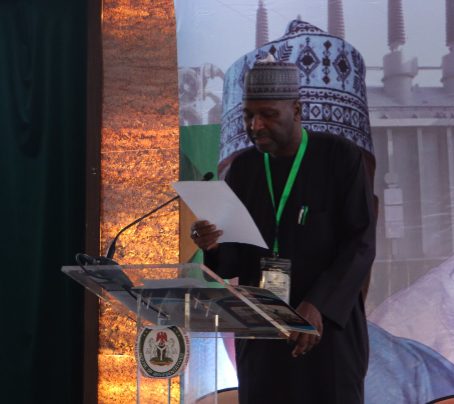
Speaking at the ongoing four-day Parliamentary/Stakeholders Engagement Summit on Power Sector Reforms in Lagos, TCN Managing Director and Chief Executive Officer, Engr. Sule Ahmed Abdulaziz, said the company’s transmission network can wheel up to 8,700 megawatts (MW), far above the country’s highest-ever generated and delivered power of 5,801.84MW recorded on March 4, 2025.
Represented by the General Manager, Transmission Services, Engr. Ali Sharifai, Abdulaziz said the figures demonstrate that the transmission network is not the primary constraint in Nigeria’s electricity value chain.
According to him, TCN has expanded its wheeling capacity from about 7,000MW to 8,700MW through strategic investments and infrastructure upgrades supported by the Federal Government and international development partners.
He disclosed that between January 2024 and November 2025, the company commissioned 82 transformers, adding about 8,500MVA of transformation capacity nationwide, while also securing more than $1.4 billion in financing from development partners, including the World Bank, African Development Bank (AfDB), Japan International Cooperation Agency (JICA) and Agence Française de Développement (AFD).
The TCN boss further highlighted ongoing efforts to modernise the grid through a nationwide Supervisory Control and Data Acquisition (SCADA) system, aimed at improving real-time monitoring, fault management and operational efficiency.
While acknowledging persistent challenges such as vandalism, right-of-way encroachment, inadequate sector financing and market liquidity concerns, Abdulaziz stressed that a coordinated approach involving government, regulators, security agencies and private sector players is essential to achieving sustainable improvements in electricity supply.
He also called on the National Assembly to strengthen legal protections for critical power infrastructure, ensure adequate funding for transmission projects and support the full implementation of the Electricity Act 2023.
The summit, which brings together key stakeholders across the electricity and gas sectors, is reviewing Nigeria’s power sector reforms from 2007 to 2024 and exploring pathways to a more reliable and competitive energy market.
Follow the Savinews Africa channel on WhatsApp:https://whatsapp.com/channel/0029VawgaEL5vKA9Y5XTFg0n