Shelves Empty, Rights Retreat As US Funding Cuts Hit Kenya’s Health Services
By Shobha Shukla, CNS
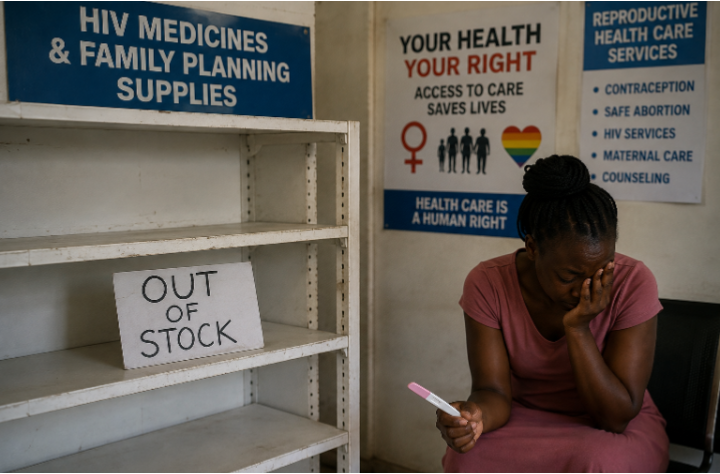
When health funding disappears, the first signs may be easy to miss: an empty pharmacy shelf, a missed HIV refill, a cancelled community outreach.
But in Kenya, health workers and rights advocates say the consequences are now reaching far beyond disrupted programmes, with rising pregnancies, HIV infections and unsafe abortions, while anti-rights groups exploit the vacuum.
Nelly Munyasia, Executive Director of the Reproductive Health Network Kenya (RHNK), said the impact became immediate after the US Agency for International Development (USAID) stop-work order in January 2025.
“We saw shelves go dry,” she said.
HIV treatment, antiretroviral refills, counselling, testing, referrals and community outreach were disrupted. Family planning commodities also became harder to access, leaving communities that had depended heavily on donor-supported services exposed.
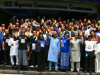
Munyasia spoke during a SHE & Rights session at the 26th International AIDS Conference (AIDS 2026), hosted by the Global Center for Health Diplomacy and Inclusion (CeHDI), CNS and partners.
The disruption is now showing up in human consequences.
A baseline survey launched in late July by RHNK, in partnership with Kenya’s Ministry of Health, the National Council for Population and Development, IPPF and others, found early signs of rising pregnancies, HIV infections and reinfections, as well as increased reports of unsafe abortion in five counties.
“Girls are walking to facilities with ruptured uterus. They are walking to facilities bleeding almost to death,” Munyasia said.
For her, the lesson is clear: HIV cannot be treated as a stand-alone problem.
The same adolescent may need HIV prevention, contraception, maternal healthcare, protection from gender-based violence and safe, non-judgmental services.
As services weakened, Munyasia said, organised anti-rights and anti-gender groups have moved aggressively into the space.
She said some organisations have stopped using the word “rights” in their work, while governments and institutions that previously promoted gender equality and inclusion have become more cautious. In some cases, the word “gender” has reportedly disappeared from official websites.
Healthcare workers serving LGBTQI people, adolescents and women seeking safe abortion care are also facing increased harassment and surveillance, she said.
“This really creates an environment that is very hostile for this population that so much needs care,” Munyasia said.
But RHNK says the answer cannot be to simply wait for international funding to return.
Dr Edison Omollo, the organisation’s Programme Director, outlined a four-part response: build stronger coalitions across health, education, gender and finance sectors; strengthen government systems rather than create parallel programmes; integrate HIV, sexual and reproductive health, maternal care and gender-based violence services; and expand digital health and self-care options.
“It is only the government system that is able to deliver at scale,” Omollo said.
That shift is becoming increasingly urgent as countries rethink health systems built around external donor funding.
The Kenyan experience offers a warning for other countries: when one funding stream disappears, the damage does not remain inside one programme.
It can spread from HIV clinics to family planning services, from pharmacies to communities, and create space for organised campaigns against health and gender rights.
With the 2030 AIDS targets already under pressure, the question is no longer simply who will replace lost funding.
It is whether governments and health systems can build services strong enough to survive when donors leave, and protect the people who depend on them when political opposition grows louder.
Shobha Shukla – CNS (Citizen News Service)
Shared under Creative Commons (CC).
Follow the Savinews Africa channel on WhatsApp:https://whatsapp.com/channel/0029VawgaEL5vKA9Y5XTFg0n
Join Our WhatsApp Community