At 80, The World’s Court Faces A New Era Of Global Tensions And Legal Reckoning
In a world increasingly defined by geopolitical rivalries, contested borders and complex humanitarian crises, the enduring relevance of the International Court of Justice is being tested like never before.
Eight decades after it first convened, the court remains a cornerstone of international law, quietly shaping the rules that govern how nations behave, even when global consensus appears fragile.
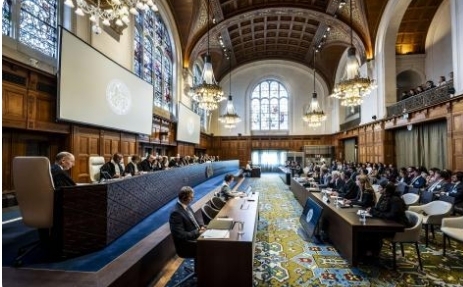
Established in 1946 and headquartered at the iconic Peace Palace in The Hague, the ICJ serves as the principal judicial organ of the United Nations.
Its core mandate is to settle legal disputes submitted by states and to provide advisory opinions on legal questions referred by authorised UN organs and specialised agencies.
Over the past 80 years, the court has presided over some of the most sensitive and far-reaching disputes in global history, ranging from territorial disagreements and maritime boundaries to the legality of the use of force and allegations of genocide.
While it does not prosecute individuals, the role of prosecuting individuals belongs to the International Criminal Court; its rulings carry significant legal and diplomatic weight, often shaping international norms and state conduct.
Key Facts About the ICJ
The court is composed of 15 judges elected for nine-year terms by both the UN General Assembly and the Security Council.
Only states, not individuals or organisations, can be parties in contentious cases before the ICJ.
Its official languages are English and French.
Judgments are binding on the parties involved, though enforcement depends largely on state compliance or action by the UN Security Council.
The ICJ also issues advisory opinions, which, while not binding, carry substantial legal authority.
Despite lacking direct enforcement powers, the ICJ’s influence lies in its legitimacy and moral authority.
Its decisions have helped de-escalate tensions, clarify legal ambiguities and reinforce a rules-based international order.
Yet, as the court marks its 80th anniversary, it faces evolving challenges, from increasing politicisation of international disputes to questions about compliance with its rulings.
Analysts argue that while the ICJ cannot single-handedly resolve global conflicts, its role in promoting dialogue over confrontation remains indispensable.
As nations navigate an uncertain future, the ICJ stands as a reminder that even in times of discord, law, not force, offers a path to resolution.
Follow the Savinews Africa channel on WhatsApp: https://whatsapp.com/channel/0029VawgaEL5vKA9Y5XTFg0n