25 Years of ECOWAS Parliament: Has West Africa Truly Deepened Regional Democracy?
A quarter of a century after its creation, the ECOWAS Parliament stands as one of West Africa’s most recognisable symbols of the region’s democratic aspirations.
Yet, its journey tells a story of steady progress mixed with persistent structural limitations, an institution striving to become the people’s voice in a region still grappling with coups, political instability, and uneven democratic practices
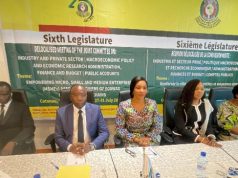
Established in 2000 as part of ECOWAS’ broader push to promote integration, good governance, and collective security, the Parliament was envisioned as a platform where citizens’ concerns could shape regional policies.
Over the years, it has played a crucial role in election observation, conflict prevention missions, and advocacy for democratic norms.
Its delegations have intervened in politically tense environments, from The Gambia’s post-election standoff in 2016 to monitoring electoral processes across Nigeria, Sierra Leone, Liberia, and beyond, often helping to ease tensions and discourage violence.
One of its most notable achievements is its consistent defence of constitutional order. When term-limit manipulation and military takeovers resurfaced in parts of the region, the Parliament became a vocal critic, pushing for the adoption of a regional constitutional convergence principle to deter democratic backsliding.
It has also served as a convening house where national lawmakers collaborate on security, economic integration, and human rights issues, especially at a time the region battles terrorism, widespread youth unemployment, and institutional fragility.
However, the Parliament’s impact has been limited by its largely advisory status. Without full legislative powers, its resolutions remain recommendations rather than binding instruments.
This has weakened its ability to effectively check executive excesses or compel member states to implement regional commitments.
Internal politicking, funding constraints, and uneven participation by national governments have also slowed its institutional growth.
Despite these challenges, the ECOWAS Parliament has gradually expanded its influence.
Recent reforms, including efforts towards direct elections of Members of Parliament, signal a shift towards deeper democratic legitimacy.
If realised, this would transform the institution from a consultative assembly into a people-driven legislature capable of shaping regional governance more decisively.
As it marks 25 years, the Parliament stands at a crossroads. Its track record shows a body that has championed democratic values, contributed to peace efforts, and amplified regional dialogue. It is however, still limited by structural gaps that must be addressed if it is to fully serve as West Africa’s democratic backbone.
The next quarter-century will test whether ECOWAS lawmakers can translate ambition into authority, helping build a region where democracy is not just an aspiration, but a lived reality.
Follow the Savinews Africa channel on WhatsApp:https://whatsapp.com/channel/0029VawgaEL5vKA9Y5XTFg0n