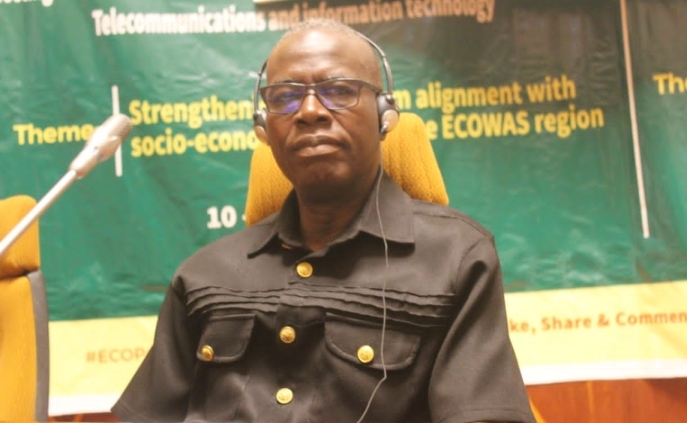
ECOWAS Lawmaker Warns Leaders: Stop Paying Lip Service To Education Reform
By Kwaku Sakyi-Danso & Sandra Chukwugekwu
Education reform in West Africa must move beyond speeches and policy papers to real, measurable action.
That was the strong warning from a Liberian lawmaker who says the region risks deepening unemployment and migration if its education systems fail to equip young people with practical skills.
Samuel Reagen Enders, a member of Liberia’s delegation to the ECOWAS Parliament and part of the Community Parliament’s Joint Committee on Health, made the call on the sidelines of a delocalised parliamentary meeting in Lomé, Togo.
Speaking with urgency, Enders cautioned against empty promises that fail to translate into meaningful change.
“I hope we would not pay lip service to this,” he said. “We need to look at the data, look at the facts, and recognise the importance of education in strengthening our Community.”
Education and the Jobs Reality
The five-day meeting brings together members of the ECOWAS Parliament’s joint committees on Education, Science and Culture; Health; Telecommunications; and Information Technology.
Discussions are centred on the theme: “Strengthening curriculum alignment with socio-economic needs of the ECOWAS region.”
The theme reflects growing concern across West Africa that current education systems are producing graduates who are poorly prepared for the realities of the job market.
Enders stressed that the region’s rapidly growing youth population makes reform urgent and unavoidable.
“We have a huge number of young people in this sub-region,” he said. “They must be educated, and not just academically. We are talking about practical skills and opportunities that allow them to work, support their families, and build their future.”
Skills Gap Driving Migration
The Liberian legislator painted a troubling picture of a region losing many of its young people to migration because they lack the skills demanded by local industries.
“A lot of our population is leaving the sub-region because there are no jobs,” he noted. “They are not equipped; they are not ready for the job market at hand.”
According to him, aligning education systems with economic realities could transform the employment landscape.
“If we align education with our economy — understanding what jobs are available and what skills are required, we can get our young people working.”
Such reforms, he argued, would strengthen human capital, boost productivity, and reduce reliance on foreign technical expertise in key sectors.
“If we want to keep our young people and build our societies, we must develop the skills we need locally,” Enders added.
Regional Cooperation Is Key
Enders also emphasised that education reform cannot succeed if countries act independently. Instead, he called for coordinated regional planning to identify labour market needs across ECOWAS.
“We cannot work in isolation. We should be able to coordinate,” he said. “We must assess what skills are needed in our communities and across member states.”
Using Liberia’s mining sector as an example, he questioned whether enough trained personnel exist to operate and maintain the sophisticated equipment used in the industry.
“When machines break down, who fixes them?” he asked.
He also recalled a conversation with a Nigerian gas sector worker during his journey to the meeting.
“He said the challenge is that they do not have people who are ready to work. That is why we must identify the jobs our economies need and train people for them.”
One Region, Shared Development
For Enders, the future of West Africa depends on collaboration rather than competition among countries.
“If Liberia thinks it can succeed without Ghana, that is a mistake,” he said. “If we understand that our development depends on one another, we will begin to work together.”
He believes regional cooperation will also help ECOWAS countries drive innovation, technological growth and sustainable development.
“If we want new discoveries and technological advancement in our region, then we must work together.”
Follow the Savinews Africa channel on WhatsApp: https://whatsapp.com/channel/0029VawgaEL5vKA9Y5XTFg0n