JHR Seeks NUJ FCT Collaboration To Strengthen Media Freedom, Gender Equality and Journalist Protection In Nigeria
A high-level delegation from Journalists for Human Rights (JHR) has visited the Nigeria Union of Journalists (NUJ) FCT Council, engaging leaders from NAWOJ on opportunities to improve journalist safety, gender inclusion, and ethical reporting in Nigeria.
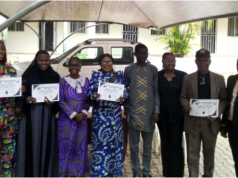
The team, made up of the Executive Director of JHR, Bill Killorn, the Director of Operations, Amara Bangura, and the Director of African Programmes, Mustafa Dubua, met with the NUJ FCT Chairperson and executives in Abuja in what both parties described as a “timely and strategic conversation”.
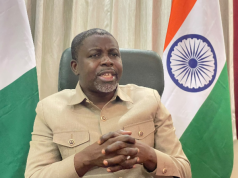
Speaking during the meeting, the leader of the delegation, JHR’s Executive Director, Bill, said the organisation, headquartered in Toronto, Canada, works across Sub-Saharan Africa, the Middle East, North Africa, Europe, and Asia to strengthen journalists’ capacity to tell impactful, community-driven stories.
He emphasised that JHR does not bring “pre-packaged” foreign projects into countries but co-creates solutions with local journalists and human rights advocates.
“We know there is scepticism about Western development organisations, and that scepticism is valid.
Our programs are designed in the countries where we work by local media and human rights professionals. Our role is to support, not dictate,” he said.
Bill added that JHR currently receives most of its funding from the Government of Canada and is expanding its work in Africa, with Nigeria being a priority country due to its size, diversity, and media influence.
JHR’s Director of African Programmes Mustafa Dumbuya on his part, noted that Journalism cannot thrive without gender inclusion and safety
He highlighted some of the organisation’s flagship initiatives, particularly in Kenya, where it partners with the Editors’ Guild, the Women in Media network, media houses, and journalists’ unions.
He explained that research across several countries shows that sexual harassment in newsrooms remains a major barrier preventing women from advancing into leadership roles.
“Many young female journalists leave the newsroom early because they face harassment, intimidation, and an environment that doesn’t support their growth. We work with unions and editors to develop policies that address these challenges and promote inclusive media leadership,” he said.
Responding, the NUJ FCT Chairman, Comrade Grace Ike, welcomed the JHR delegation and described the engagement as “a breath of fresh air” for journalists, especially women, who face multiple layers of discrimination, intimidation, and workplace violence.
She noted that Nigeria is “far behind” in gender-inclusive leadership in the media, even though women are increasingly stepping forward to contest leadership positions.
She highlighted key challenges confronting Nigerian journalists, including poor remuneration and welfare, sexual harassment and exploitation, arbitrary arrests, online/offline threats, lack of funds for investigative reporting, newsroom gender stereotypes, political interference and censorship
Ike, narrated instances where female journalists were discouraged from speaking publicly, denied visibility, or asked to “come to a man’s house” for job interviews, a trend she described as unacceptable.
“If we have strong policies and support systems, more women will speak out. They stay silent because they fear abandonment, backlash, or lack of protection,” she said.
She added that the NUJ FCT Council is committed to ethical journalism, press freedom, and ensuring that journalists’ welfare, transportation, remuneration, and safety are a top priority.
The NUJ Chairman assured the delegation of full transparency and accountability in any future collaboration.
Speaking on behalf of the Nigeria Association of Women Journalists (NAWOJ), FCT Chapter, the Chairperson, Bassey Ita-Ikpang, stressed the need for continued partnership, especially in empowering female journalists to report women’s issues from a strength-based perspective.
According to her, many women in leadership owe their positions to male sponsors, not competence, and cultural barriers discourage women from speaking publicly, saying women often withdraw from interviews at the last minute out of fear
She noted that the narratives that “women don’t support women” are often driven by men who benefit from division
“We have real women who deserve visibility. With support, resources, and consistent enlightenment, equality is not just possible, it is inevitable,” she said.
Both JHR and NUJ FCT agreed to explore partnerships in journalist safety and protection, gender-inclusive newsroom policies, capacity-building and leadership training, support for investigative reporting, advocacy for ethical, factual journalism and strengthening media independence
The meeting ended with an open interactive session where journalists asked questions and shared experiences on harassment, low pay, safety, and the urgent need for media development support in Nigeria.
Follow the Savinews Africa channel on WhatsApp:https://whatsapp.com/channel/0029VawgaEL5vKA9Y5XTFg0n