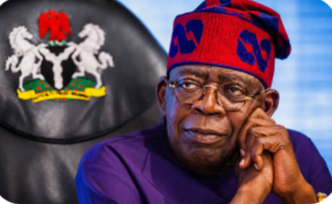
Where On Earth Is President Tinubu?
By Biliyaminu Suraj
The most troubling question surrounding President Bola Tinubu’s extended stay in Europe is not simply where he is.
It is why Nigerians have been given so little clarity about the circumstances of an absence that has now stretched beyond the constitutional 21-day threshold.
Tinubu left Abuja on 30 August 2026 for what was announced as a three-week working vacation in Europe.
He was first in London before travelling to Paris on 13 September, where he held a private dinner with French President Emmanuel Macron on 17 September and met businessman Vincent Bolloré the following day.
On 21 September, the Presidency announced an extension.
That decision came as Vice President Kashim Shettima was also outside Nigeria, attending the United Nations General Assembly on the President’s behalf. Tinubu had chosen not to attend UNGA himself.
This has inevitably raised questions about Section 145 of the 1999 Constitution, which provides for the Vice President to assume the functions of President when the President transmits a written declaration of vacation or inability to perform his functions.
The Presidency has maintained that Tinubu remains fully in charge, issuing directives remotely.
Among them was an order for an investigation into the deaths of 37 suspected illegal miners in custody in Niger State.
But the constitutional question remains: at what point does an extended presidential absence require formal action to guarantee uninterrupted constitutional authority?
The 37 deaths that cannot be ignored
The controversy has become even more uncomfortable because of the deaths of 37 artisanal miners detained during an anti-illegal-mining operation.
The incident raises difficult questions about the treatment of people in government custody, the conduct of security agencies and the wider system regulating Nigeria’s mining sector.
The Nigeria Security and Civil Defence Corps (NSCDC) has said it arrested 24 personnel linked to the deaths and suspended its Niger State Commandant.
It has also reported that its Mining Marshals have arrested more than 600 suspected illegal miners, recovered over 100 illegal mining sites and commenced prosecution of more than 500 suspects since the unit was established in March 2024.
Yet a bigger question remains: who authorised the operation that resulted in the deaths, and who bears responsibility for what happened afterwards?
That question deserves an independent and transparent answer.
Senate Committee Chairman on Interior, Senator Adams Oshiomhole, has called for such an investigation.
He has previously alleged that powerful individuals, including retired military officers, are involved in illegal mining networks.
Those are serious allegations and should be subjected to evidence, not political rhetoric.
For many Nigerians, however, the immediate concern is simpler: 37 people entered government custody alive and did not leave alive.
Where are the powerful players?
There is another uncomfortable dimension to the story.
Nigeria’s crackdown on illegal mining has largely brought the enforcement agencies into contact with small-scale operators working at the bottom of the mining chain.
Meanwhile, allegations about powerful mining interests and sophisticated criminal networks have persisted for years.
The question is whether enforcement is reaching those who control the networks or merely those at the bottom of them.
Former Vice President Atiku Abubakar has criticised the Federal Government over the deaths and questioned the responsibility of President Tinubu, Interior Minister Olubunmi Tunji-Ojo and Solid Minerals Development Minister Dele Alake.
The political accusations should not substitute for an investigation. But neither should an investigation be allowed to become a public-relations exercise.
And where is the President?
Tinubu’s decision to remain in Europe while Shettima represented Nigeria at the UNGA has added another layer to the controversy.
The Presidency has pointed to the President’s meetings and directives as evidence that he remains engaged in governance.
But presidential leadership is not only about issuing instructions. It is also about accountability, transparency and being available to answer difficult questions when the country faces a serious crisis.
The President’s absence from UNGA also raises a legitimate question about whether Nigeria missed an opportunity to explain itself directly to the international community at a time when questions about security, human rights and deaths in government custody were bound to attract attention.
Instead, Shettima addressed the gathering, speaking about Africa’s mineral wealth and the need for greater local processing and value addition.
Those issues matter. So does the unresolved question of what happened to the 37 Nigerians who died in custody.
President Tinubu may have been able to govern from Europe.
But Nigerians are entitled to ask where their President is, why his absence was extended, how the constitutional requirements were being handled, and who will ultimately answer for the deaths of those 37 miners.
The real issue is therefore not a game of Where in the World Is Carmen Sandiego?
It is a far more serious Nigerian question:
Where on Earth is President Tinubu, and who is answering for Nigeria while he is away?
Biliyaminu Suraj is a public affairs commentator and mining entrepreneur.
biliyasuraj1980@yahoo.com
Join Our WhatsApp Community