Legal Lifelines Open For Trafficking Survivors In Kano, Enugu
Prosper Okoye
For many victims of human trafficking in Nigeria, rescue is only the first battle, justice often feels out of reach.
That gap is now being addressed with the opening of new legal support hubs in Kano and Enugu, aimed at helping survivors navigate the courts, claim compensation and reclaim their rights.
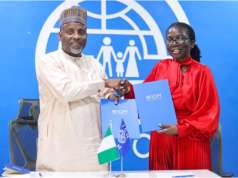
The hubs were established by the Foundation for the Internationalisation of Public Administration (FIAP) with funding from the European Union under its Support to Migration Governance project in Nigeria.
They are designed to strengthen the legal response to human trafficking, migrant smuggling and related crimes, particularly in the north and south-east.
Speaking in Abuja, FIAP’s technical adviser on criminal investigation, Sani Bello, said access to justice remains one of the biggest challenges facing survivors.
“Many victims are willing to pursue justice, but they don’t know where to turn or how the system works,” he said. “These hubs are meant to bridge that gap by supporting survivors through prosecution processes and helping them seek compensation where possible.”
The Kano and Enugu centres expand an existing network launched in 2020 in Lagos, Edo and Delta states by the International Organisation for Migration (IOM), bringing the total number of hubs nationwide to five.
The model connects lawyers, human rights bodies and law enforcement agencies to provide coordinated legal assistance.
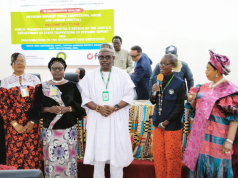
Coordinators from all five hubs are currently undergoing specialised training in Abuja alongside representatives of the Legal Aid Council of Nigeria, the National Human Rights Commission, the Nigerian Bar Association and the National Agency for the Prohibition of Trafficking in Persons (NAPTIP).
The focus includes civil litigation, victim compensation and better coordination among investigators and prosecutors.
Experts say the initiative is timely, as trafficking patterns in Nigeria continue to evolve. Osita Osemene, executive director of Patriotic Citizen Initiatives, noted that internal trafficking has risen sharply, driven by insecurity, displacement and economic hardship.
“Trafficking is no longer only about crossing borders,” he said. “Many victims are denied justice even after rescue because legal support is missing or inadequate.”
Survivor advocates agree. Dr Ijeoma Nnaji of the Network of Trafficked Children, Abuse and Labour in Nigeria said traffickers increasingly use deception, including false marriages, to exploit victims.
“Rescue alone is not enough,” she said. “Survivors need legal protection, counselling and long-term support to truly recover.”
With the new hubs in place, stakeholders hope more survivors will finally find both protection and a path to justice.
Follow the Savinews Africa channel on WhatsApp: https://whatsapp.com/channel/0029VawgaEL5vKA9Y5XTFg0n