TETFund Moves To Secure Campuses, Boost Digital Learning In Universities
By Adaora Ezenwaka
For students who travel long distances to attend lectures, return home late after studying in university libraries or depend on commercial motorcycles to move between their homes and campuses, insecurity remains a serious concern.
This situation is receiving renewed attention from the Tertiary Education Trust Fund (TETFund), which is pushing for stronger campus security, improved student accommodation and wider adoption of digital learning across Nigerian tertiary institutions.
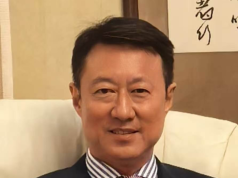
According to the Executive Secretary of TETFund, Sonny Echono, fewer than 50 per cent of students currently reside on their campuses, exposing many to security risks associated with commuting and movement outside university environments.
Echono spoke at the Fund’s annual stakeholder engagement with heads of beneficiary institutions and chairmen of governing councils, where he outlined priorities for the 2027 intervention framework.
He said the security of students and staff must remain a major responsibility of institutional managers, noting that tertiary institutions have increasingly become soft targets for criminal elements.
To address the challenge, he disclosed that TETFund had introduced a special intervention for campus security infrastructure, covering not only perimeter fencing but also surveillance systems, solar-powered street lighting, communication equipment, walkie-talkies and patrol vehicles.
He said the Fund had also engaged security agencies and encouraged institutions to identify security solutions suited to their individual environments.
According to him, the expansion of student accommodation through direct construction and public-private partnerships (PPPs) is part of efforts to reduce students’ exposure to security threats.
Echono urged governing councils and university managements to take advantage of the hostel development initiative, explaining that institutions are expected to provide land while private partners bring in developers and facility managers.
He said the initiative could be extended beyond student hostels to commercial facilities, shopping centres, pharmacies, agricultural ventures and other services that would generate revenue for institutions.
The TETFund chief argued that declining public resources, rising infrastructure costs and competing government demands made it necessary for tertiary institutions to explore alternative funding sources.
He stressed that private investors would only commit funds to projects with viable business models and clear prospects of recovering their investments.
On digital education, Echono expressed concern over the slow adoption of TETFund’s digital learning platform, urging institutions to accelerate its integration into teaching and academic activities.
He said the Fund expected more than 60 per cent of teaching staff to be competent in digital curriculum delivery, stressing that technology would enable students to access lectures and academic resources beyond the physical classroom.
He also challenged universities to embrace artificial intelligence while developing internal safeguards against academic dishonesty and other ethical challenges associated with emerging technologies.
Echono further disclosed that TETFund is moving its intervention processes online, urging institutions to discontinue dependence on physical submissions and take advantage of the training programmes provided to facilitate the transition.
On research and innovation, he said the Fund is strengthening support for researchers through prototype development, patent registration, copyright protection and links with private-sector investors.
He announced that a second version of the National Research Fund is expected within two to three weeks, adding that universities must find ways to commercialise research findings rather than limiting their value to academic publications and promotion requirements.
The Executive Secretary also identified the transition from the education tax to the development levy regime as a significant factor that would shape the Fund’s operations in the coming year.
He said the anticipated January/February 2027 election period could also affect government operations and called for effective planning ahead of the new intervention cycle.
Earlier, a representative of the Permanent Secretary, Federal Ministry of Education, Anyikamba Jude, had commended TETFund for providing a platform to address critical challenges affecting beneficiary institutions and strengthening the delivery of tertiary education.
He acknowledged the Fund’s contributions to infrastructure, research, academic development and institutional capacity building, describing them as important to improving the quality and global competitiveness of Nigerian tertiary institutions.
Jude urged beneficiary institutions to uphold accountability, transparency and prudent management of resources, stressing that TETFund interventions must deliver measurable results and value for money.
He said the Federal Government is committed to improving the tertiary education sector under President Bola Ahmed Tinubu’s renewed agenda.
Also speaking, a representative of the National Universities Commission (NUC), Mohammed Faruk, acknowledged TETFund’s contribution to the development of university infrastructure and research capacity.
Faruk welcomed the Fund’s increased attention to campus security, student accommodation and information and communication technology, describing them as critical to the effective management of universities.
He, however, cautioned institutional managers against poor implementation of projects, insisting that funds must be properly utilised, projects completed to required standards and facilities adequately maintained.
He said the impact of TETFund interventions should be measured not merely by the number of projects delivered but by the difference they make to universities and the communities they serve.
The NUC representative reaffirmed the Commission’s commitment to working with TETFund and universities to ensure that investments in the sector contribute to improving the quality of university education.
The stakeholder engagement, which traditionally holds between October and November, provides an opportunity for TETFund to review its intervention guidelines, assess ongoing projects and obtain feedback from beneficiary institutions ahead of the following year’s budget and intervention cycle.