Africa Moves To Strengthen Collective Response To Conflicts As ECOWAS Signs Standby Force MoU
For communities caught in the crossfire of Africa’s recurring conflicts, the difference between warning and action can mean life or death.
A new regional agreement seeks to close that gap by strengthening the continent’s ability to mobilise peacekeeping forces as crises emerge.
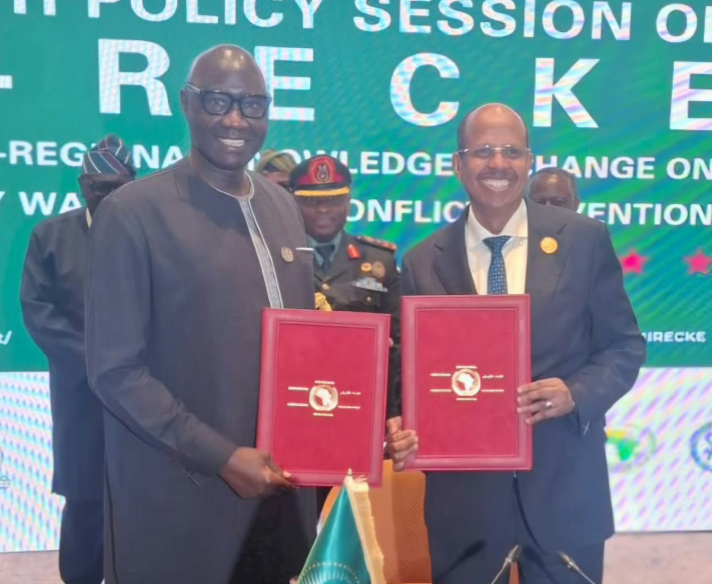
The President of the ECOWAS Commission, General Birame Diop, has signed a Memorandum of Understanding with the African Union and other regional blocs to clarify how the African Standby Force (ASF) will be prepared, deployed and managed during conflicts and complex emergencies.
Diop signed the agreement on behalf of the ECOWAS Commission in El Alamein, Egypt, during the Fifth Policy Session of the Inter-Regional Knowledge Exchange on Early Warning and Conflict Prevention (I-RECKE).
The session was held on the margins of the 8th Mid-Year Coordination Meeting.
The MoU establishes a framework defining the respective roles and responsibilities of the AU, Regional Economic Communities (RECs) and Regional Mechanisms (RMs) in the preparation, employment, deployment and post-deployment of the African Standby Force.
The arrangement brings together regional standby capabilities that can be mandated by the AU to undertake Peace Support Operations and respond to complex emergencies.
Other signatories to the agreement are the African Union, Economic Community of Central African States (ECCAS), North African Regional Capacity (NARC) and Southern African Development Community (SADC).
Beyond the formal signing, the agreement represents an effort to make Africa’s early-warning and conflict-prevention architecture more responsive, coordinated and capable of translating warnings into timely action.
For populations facing the consequences of armed conflict, the effectiveness of such a framework will ultimately be measured not by the agreements signed, but by how quickly and effectively protection reaches those at risk.
Join Our WhatsApp Community