Nigeria, India Seal Strong Human Rights Partnership
By Princess-Ekwi Ajide
For Nigerians held in custodial centres in India, the renewed diplomatic engagement between Abuja and New Delhi could offer fresh hope for better protection of their dignity and fundamental human rights, as both countries move to strengthen cooperation in the administration of human rights.
The concerns over the welfare of Nigerian citizens in Indian detention facilities featured prominently as Nigeria and India signed a Memorandum of Understanding (MoU) to deepen institutional cooperation between their respective National Human Rights Commissions.
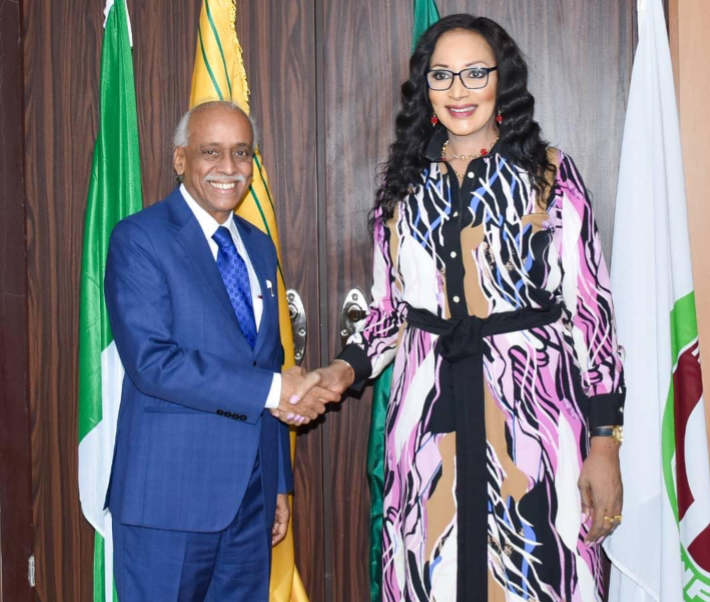
The agreement, which is expected to promote access to justice, improve complaint-handling mechanisms and strengthen human rights protection, was highlighted during a meeting between Foreign Affairs Minister, Ambassador Bianca Odumegwu-Ojukwu, and a joint high-level delegation from the two countries’ human rights commissions in Abuja.
The meeting took place on Tuesday, 10 November 2026, at the Ministry of Foreign Affairs.
Speaking during the engagement, Odumegwu-Ojukwu described the agreement as a timely step towards translating the longstanding diplomatic relations between Nigeria and India into practical institutional cooperation.
She stressed the need for stronger access to justice, more effective complaint-handling systems and improved protection for persons in vulnerable circumstances.
The Minister also raised concerns about the treatment of Nigerians serving in custodial centres in India, calling for appropriate attention to their welfare, dignity and fundamental human rights.
She said Nigeria and India, as members of the Global South, had an opportunity to contribute meaningfully to a more inclusive international human rights system.
Odumegwu-Ojukwu further reaffirmed Nigeria’s commitment to international human rights obligations following the country’s election to the United Nations Human Rights Council for the 2027-2028 term.
She expressed appreciation to UN Member States for supporting Nigeria’s election, assuring that the country would discharge its responsibilities in line with the UN Charter and the Universal Declaration of Human Rights.
Earlier, the Executive Secretary of Nigeria’s National Human Rights Commission, Chief Anthony Ojukwu, described the MoU as an important framework for technical exchanges, institutional learning and improved human rights enforcement.
He said the partnership would focus on strengthening complaint-management systems, promoting human rights compliance in security sector governance and facilitating joint research on international law, human rights implementation and emerging issues.
Ojukwu also emphasised the importance of closer collaboration between the NHRC and the Ministry of Foreign Affairs to ensure that international human rights standards are reflected in Nigeria’s treaty obligations and diplomatic engagements.
On his part, the Chairperson of India’s National Human Rights Commission, Justice V. Ramasubramanian, described the agreement as an opportunity for both countries to share experiences, exchange best practices and build institutional capacity.
He noted that Nigeria and India shared important similarities, including large populations, ethnic and religious diversity, rich cultural heritage and democratic aspirations.
The delegation was jointly led by Ojukwu and Justice Ramasubramanian.
The agreement marks another step in Nigeria–India relations, with both countries seeking to strengthen human rights institutions, protect fundamental freedoms and expand cooperation through practical institutional engagement.
Join Our WhatsApp Community