African Health Ministers Push For AI Sovereignty At Nairobi Summit
Princess-Ekwi Ajide
As artificial intelligence rapidly reshapes global healthcare systems, African leaders are insisting that the continent must not merely consume digital solutions but own, govern, and benefit from them.
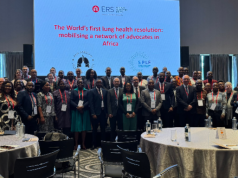
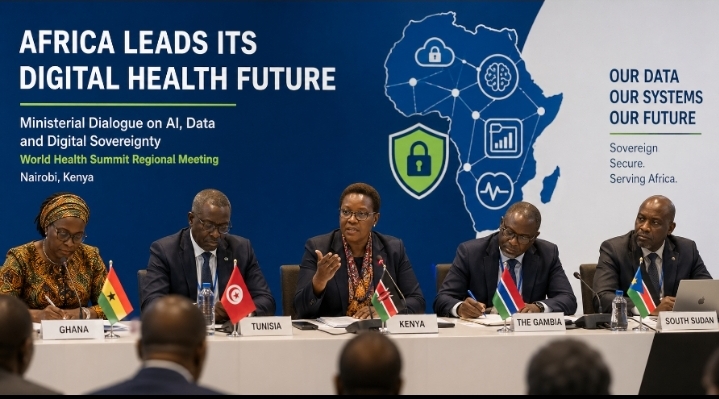
This was the central message at the Ministerial Dialogue on AI, Data and Digital Sovereignty during the ongoing World Health Summit Regional Meeting in Nairobi, where Africa’s Ministers of Health and global partners gathered to chart a common path for digital health transformation across the continent.
The high-level session focused on how artificial intelligence, health data systems, and digital infrastructure can be harnessed to improve health outcomes while protecting national sovereignty and citizens’ rights.
Opening the conversation, delegates stressed that digital health must serve the real needs of African populations rather than external interests.
Tunisia’s Health Minister, speaking virtually, warned that data sovereignty is not an abstract concept but a matter of national control over infrastructure, health records, and digital decision-making systems.
He emphasised that artificial intelligence must remain a support tool for health professionals, guided by constant human oversight, transparency, and accountability.
Tunisia, he said, is pursuing a progressive approach to harmonised African governance frameworks that protect health data while enabling innovation and emergency response.
Portugal’s Health Minister, Ana Paula Martins, echoed the need for equitable partnerships, noting that digital sovereignty is not about restricting data flows but ensuring countries have the capacity to govern, use, and benefit from their own systems.
Drawing from Portugal’s experience in digital prescribing and health data governance, the Minister said technology should not be something countries merely import, but something they own, adapt, and regulate.
Ghana’s Health Minister, Kwabena Akandoh, delivered one of the strongest interventions, declaring that “he who controls the data controls us.”
He challenged African countries to think beyond data collection and ask deeper questions about ownership of cloud storage, satellites, devices, and digital infrastructure.
Ghana, he revealed, has moved from fragmented health data systems to a unified national exchange where all health institutions must plug into one central platform.
The country plans to use this data to drive its newly introduced free primary healthcare policy and tackle rising non-communicable diseases such as hypertension, diabetes, and cancer.
Artificial intelligence, he said, could help shift the focus from curative care to preventive healthcare by predicting disease risks before they become life-threatening.
From The Gambia, the Health Minister, Ahmadoh Samateh, shared practical challenges around digitisation, including the country’s digital civil registration system and electronic logistics management tools.
He however, raised concerns over dependence on foreign hosting services, recounting how delayed payments for hosting nearly disrupted birth registrations.
“Why must we keep paying forever?” he asked, highlighting the dangers of not controlling national digital systems.
He also noted that despite funding availability, the country struggles to recruit experts capable of establishing electronic medical record systems, exposing major capacity gaps across the continent.
The Africa Centres for Disease Control and Prevention described the issue as not just a technology agenda, but a sovereignty agenda.
Its representative said Africa must move from fragmented, donor-driven pilot projects to interoperable national systems and sovereign digital infrastructure.
Africa CDC is now pushing for 90 per cent of primary healthcare facilities across the continent to be digitalised by 2035.
He warned that African health data is often stored, processed, and monetised elsewhere, creating what he described as a dangerous “value divide.”
“There is no digital sovereignty without financing,” he said, calling for stronger investment in connectivity, cybersecurity, workforce capacity, interoperability, and AI readiness.
Global health leaders from the World Health Organization’s Africa, Europe, and Eastern Mediterranean regions also backed the call for stronger African leadership in digital health governance.
WHO officials stressed that sovereignty does not mean isolation, but rather building strong local governance systems that allow countries to regulate technology, protect privacy, and collaborate across borders.
They urged African governments to avoid chasing “shiny objects” and instead focus on building lasting digital public infrastructure, clear national roadmaps, and strong regulatory institutions.
The Pan-African Health Informatics Association also called for urgent reforms, particularly the professionalisation of digital health and informatics across government systems.
Its President, Steven Wanye, argued that governments must formally recognise health informatics professionals, create legal structures to employ them, and support public-private partnerships that allow local talent to thrive ethically and sustainably.
As the session closed, delegates agreed that Africa’s digital future must be African-led, interoperable, and built on trust.
With AI increasingly becoming central to disease surveillance, diagnostics, healthcare financing, and emergency response, ministers said the real question is no longer whether Africa should digitise healthcare, but whether it will do so on its own terms.
From all indications, Africa must not only adopt AI, but must shape it and own it.
Follow the Savinews Africa channel on WhatsApp: https://whatsapp.com/channel/0029VawgaEL5vKA9Y5XTFg0n