Media Experts Sound Alarm Over Rising Threats To Journalism, Demand Stronger Legal Protection For Reporters
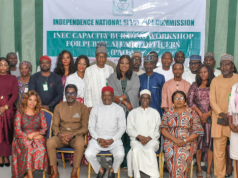
For years, journalists in Nigeria have warned that the ground beneath the profession is shifting, but at a capacity-building workshop in Keffi, media experts said the danger has now reached a critical point.
What happens when democracy’s watchdog is left unprotected in an age of unfiltered content and digital chaos?
Former NUJ President Chris Isiguzo did not mince words.
Addressing information and media officers at the NUJ FCT 2025 training, he painted a picture of a profession under siege, not just from government pressure, but from a flood of misinformation and the unchecked rise of citizen journalists.
“The tools we have now are everywhere,” he said, describing a digital space where unverified content spreads faster than facts.
“Social media influencers, content creators, they are churning out all sorts of things but the professionals must be there to control.”
Then came the critical point: despite carrying the burden of holding power to account, journalists in Nigeria still lack legal protection.
“There’s no piece of legislation that protects the practice of journalism in Nigeria,” Isiguzo warned.
“If the oxygen is plugged out and democracy begins to inhale carbon dioxide, it becomes toxic, toxic for democracy and toxic for good governance.”
He spoke of reporters working under fear, fear of harassment, arrest, intimidation, or even imprisonment while still trying to inform the public responsibly.
Comrade Grace Ike, Chairman of NUJ FCT, brought a different but equally urgent perspective.
In an era where a single headline or tweet can reshape public perception, she said information officers must move beyond issuing statements to becoming strategists, crisis managers, and reputation builders.
“We live in an age where information travels faster than policy,” Ike said. “Training is no longer optional; it is foundational.
It is the difference between being reactive and being strategic.”
She urged participants, including representatives from the Ministry of Information, NCC, NASENI, military and media houses, to embrace continuous learning as a survival tool in today’s volatile information ecosystem.
Representing the Nigerian Communications Commission, Principal Manager Tunde Akpeji echoed the call, noting that the Commission sees its personnel as its greatest asset.
He said the workshop was essential to strengthening professionalism and equipping officers to communicate Nigeria’s efforts to protect critical national information infrastructure.
The event, themed Enhancing Public Image, Strategic Communication and Media Visibility in the Digital Era, featured seasoned speakers including NIPR Chairman Stanley Ogadigo, IIJ Deputy Director Nicholas Igwenagu, Dr Simon Sheyigar, and PR expert Victor Habila Alaka, all sharing insights on reputation management and ethical communication.
By the end of the programme, one message resonated clearly: without legal reforms, ethical communication, and strategic upskilling, the credibility of Nigeria’s media and the health of its democracy, may be at risk.
Follow the Savinews Africa channel on WhatsApp: https://whatsapp.com/channel/0029VawgaEL5vKA9Y5XTFg0n