Group Pushes For 5% Media Quota As NUJ FCT Backs Drive To Amplify Women’s Voices
In a country where women make up half the population, why do their stories still struggle to make the news?
That uncomfortable question hung in the air on Wednesday as Gender Strategy and Advancement International (GSAI) visited the Nigeria Union of Journalists (NUJ) FCT Council, armed with data, urgency and a bold demand.
GSAI is calling for a mandatory 5% media quota dedicated to women and girls across politics, governance, security, health, the economy and other national conversations.
But behind the statistics lies a bigger story: Nigeria’s public space is still shaped by voices largely male, powerful and familiar, while young women, rural women and women with disabilities remain almost invisible.
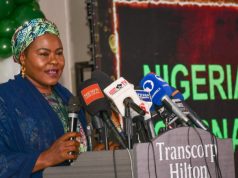
Leading the delegation, a broadcast journalist and Executive Director of GSAI, Adaora Onyechere Sydney-Jack, painted a vivid picture of systemic exclusion.
“Women’s voices are still treated as an alternative rather than part of the national agenda,” she said, warning that women are often shut out of politics long before ballots are cast.
She pointed to the 2023 elections, where more than 45 women contested but many never survived the primaries, not because they lacked competence but because the media simply did not show up for them.
“Women are not losing because they lack capacity; they are losing because they lack visibility,” she said.
The tension grew as she shared global evidence: only 25% of people featured in news stories worldwide are women, with Nigeria performing even worse. For many women, especially those far from urban centres, media silence has real consequences, fewer votes, fewer opportunities, fewer role models.
GSAI’s proposal is straightforward but ambitious: a legislated quota, backed by editorial reforms, capacity building, and bias training in newsrooms, ideally introduced as a private member bill before the 2027 elections.
NUJ FCT Chairperson Grace Ike, the first woman to lead the council in 41 years, responded with conviction.
She described the initiative as timely and pledged that the union would not only support the campaign but spearhead stakeholder engagements.
“The media must be a space where every voice, not only heard voices, is amplified and represented fairly,” she said, signalling the union’s readiness to work on training, research and advocacy for better representation of women and marginalised groups.
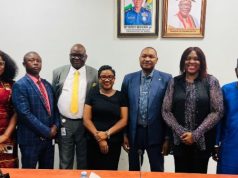
Visually, the NUJ Secretariat meeting room carried the energy of a moment that felt both symbolic and urgent, a woman-led NUJ receiving a gender accountability group, both united by a shared mission.
Delegates, including GSAI officials and NUJ executives, were in agreement as speakers called for newsroom introspection and policy change.
There was also a hint of a ticking clock.
A senior NUJ official suggested the council may issue a national statement during the 16 Days of Activism, pressing editors and media owners to support the quota. Momentum, they agreed, must not be lost.
As the meeting closed, GSAI reminded the room of the simple truth that began the conversation: a democracy cannot thrive when half its population remains unheard.
If Nigeria’s media rises to the challenge, the stories missing today may finally be told tomorrow, before the next election cycle closes the door once again.
Follow the Savinews Africa channel on WhatsApp: https://whatsapp.com/channel/0029VawgaEL5vKA9Y5XTFg0n