25 Years Of ECOWAS Parliament: The People’s Voice Awaits A Direct Vote
Princess-Ekwi Ajide
When the Economic Community of West African States (ECOWAS) was founded in 1975, the vision was lofty: a region of fifteen nations bound not only by geography but by the shared pursuit of economic co-operation, peaceful coexistence and democratic governance.
Yet almost two decades later, in 1994, the founding fathers recognised that integration required more than treaties between capitals, it needed a bridge from the citizens.
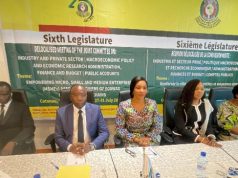
It was against this backdrop that the Protocol establishing the ECOWAS Parliament was signed on 6 August 1994, and the first Legislature was inaugurated on 16 November 2000.
This establishment of the ECOWAS Parliament was indeed a bold dream to give the people of West Africa a voice beyond borders, to turn the regional bloc’s lofty aspirations into laws and actions shaped by citizens, not just presidents.
Twenty-five years on, the dream stands tall, but the question lingers: Is the people’s voice truly being heard?
The ECOWAS Parliament, also known as the Community Parliament, was created as part of the institutional reforms that followed the 1993 Revised Treaty of ECOWAS with a clear vision to promote democracy, human rights, regional integration, and good governance across the sub-region.
The Parliament is composed of representatives drawn from national parliaments to bridge the gap between ECOWAS and the citizens it serves.
Yet, as the Parliament marks its 25th anniversary, one crucial conversation dominates the corridors of power, the call for direct elections.
Why Direct Vote Matters
Currently, Members of the ECOWAS Parliament (MPs) are not directly elected by the people.
They are nominated from national parliaments, which means citizens’ influence over who represents them at the regional level remains indirect, filtered through political systems that may or may not mirror their true will.
A direct vote, on the other hand, would allow West Africans to elect their representatives themselves, men and women accountable not to political establishments, but to the electorate.
It would mark a turning point where citizens could own ECOWAS as their institution, not a distant bureaucratic entity in Abuja.
Analysts argue that such reform could inject new legitimacy, energy, and accountability into regional governance.
Imagine a Parliament that reflects the real diversity of voices, from the fishermen of Cape Coast to the traders of Onitsha, from the cocoa farmers in Côte d’Ivoire to the artisans of Monrovia. That is the promise of direct suffrage.
Are They Meeting Up?
Over the years, the ECOWAS Parliament has made progress, conducting fact-finding missions, promoting peace and security, and advocating for gender equality and youth participation.
However, critics say its influence remains largely advisory. Without legislative powers or a direct mandate from the people, the Parliament’s resolutions often stop short of compelling action.
Former Speakers and regional observers have repeatedly called for a review of its framework to give it more autonomy and authority. “A Parliament that cannot make binding laws or truly represent the electorate risks becoming symbolic,” one diplomat noted during a recent commemorative session.
The Promise of a People’s Parliament
As the silver jubilee celebrations unfold, there’s renewed hope. The ECOWAS Commission and member states are reportedly considering reforms that could pave the way for universal suffrage, a development that would align the Parliament with models such as the European Parliament, where citizens directly elect their representatives.
Such a transition would not only deepen democracy but could also rekindle trust in regional integration, something many citizens have lost faith in amid political instability, coups, and economic challenges across West Africa.
Have They Delivered? The Progress and the Gaps
At first glance, the EP has chalked up some notable achievements.
The Speaker, Hadja Mémounatou Ibrahima, speaking in Abuja in May 2025, was emphatic about the Parliament’s role in crisis management, regional parliamentary cooperation and fostering integration across the sub-region.
It recently adopted a UA 19.6 million (approx. US$26 million) budget for 2026 – a 5 per cent increase over 2025, which showcases ambition but the picture is not unblemished.
Several critics hold that the EP remains more ornamental than operative as its members are not yet elected by direct universal suffrage.
The institution itself is pushing for change, recommending that direct elections be introduced before the end of its fifth legislature, which is March 2024; that deadline has been missed.
Integration ambitions clash with stark realities: security crises, coups, defaulting member-states and incomplete delivery of promises.
For instance, incidents just before the EP’s silver jubilee include the fracturing of parts of the region, raising doubts about how well integration is being realised.
Funding and operational effectiveness remain fragile: despite the 2026 budget, it is largely dependent on the Community Levy, and some member-states default on this obligation.
In fact, yes, the EP is meeting parts of its mandate, but its transformative promise remains partially fulfilled.
A Call to Action
The 25th anniversary is not just a milestone, it is a mirror. It reflects both the achievements and the unrealised dreams of a region striving to give power back to its people.
The next 25 years could redefine ECOWAS if its leaders muster the courage to let the people’s voice truly count.
After all, integration without representation is only half the journey.
As the silver jubilee of the ECOWAS Parliament unfolds, we stand on the edge of promise and reality.
The institution, envisioned to be “of the people”, has the opportunity to leap, but only if its members, and the citizens they serve, act with courage and persistence.
This is your region, your voice, your Parliament, and the time to claim that voice is now.
Follow Savinews Africa channel on WhatsApp: [https://whatsapp.com/channel/0029VawgaEL5vKA9Y5XTFg0n]