Child Labour, Poisoned Communities, Media Urged To Investigate Illegal Minning Crisis
Illegal mining in Nigeria is not just an economic crime, it fuels insecurity, robs the nation of billions, and devastates communities.
Yet, according to Mining Marshals Commander Attah Onoja, cartels behind the illicit trade are now bankrolling “rogue journalism” to weaken enforcement efforts.
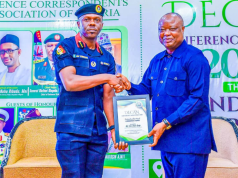
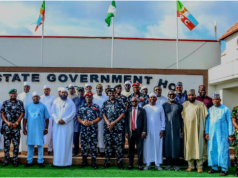
Speaking at a media parley organised by the Nigeria Union of Journalists (NUJ) FCT Council in Abuja, Onoja cautioned journalists against biased reporting, urging them instead to join forces with security agencies in exposing the powerful interests behind illegal mining.
“We will not cave to any blackmail designed to weaken our resolve,” he declared. “Nigeria’s mineral wealth belongs to all Nigerians and not to be plundered by a few.”
The Mining Marshals, an enforcement unit of the Nigeria Security and Civil Defence Corps (NSCDC) created under the Tinubu administration and mandated by the Minister of Solid Minerals, Dr Dele Alake, have been dismantling illegal camps, prosecuting offenders, and restoring order in mining hotspots across Zamfara, Nasarawa, Niger, Kaduna, Kogi, Kwara, Osun, and parts of the FCT.
Recent operations in Abuja alone saw the arrest of 72 suspects between 2023 and 2024, carried out jointly with the police and the Economic and Financial Crimes Commission (EFCC).
Illegal mining costs Nigeria an estimated $9 billion (₦13.7 trillion) annually, according to the FCT Police Commissioner, Ajao Adewale, who described it as a cartel-driven enterprise bankrolled by influential Nigerians and fuelling banditry.
Backing the Marshals’ call, the National President of the Miners Association of Nigeria (MAN), Dele Ayanleke, said the menace is sustained by corruption, poverty, and weak governance, with dire consequences such as child labour in Nasarawa’s lithium sites and mercury poisoning in Zamfara’s gold mines.
NUJ FCT Chairperson, Ms Grace Ike, stressed the media’s duty to go beyond surface reportage by investigating financiers, amplifying community voices, and holding policymakers to account.
“The media must be fearless—investigate, expose, and educate the public on the devastating impact of illegal mining,” she said, pledging NUJ’s support to empower citizens with accurate information.
For Onoja, success against illegal mining depends not only on enforcement but also on the media’s commitment to telling the truth, fearlessly and without compromise.