2027: Expert Warns Against Youth Exclusion, Demands Electoral Transparency
Princess-Ekwi Ajide
As Nigeria approaches the 2027 general elections, concerns are growing over who shapes the country’s democratic future and how technology could influence voters’ choices, with calls for greater transparency, youth inclusion and stronger safeguards against electoral disinformation.
At a national summit in Abuja, the International Press Centre (IPC), Institute
for Media and Society (IMS/CEMESO), and AI expert Ade Atabatere challenged electoral stakeholders to look beyond election-day activities and address the growing threats posed by artificial intelligence, misinformation and inadequate public participation.
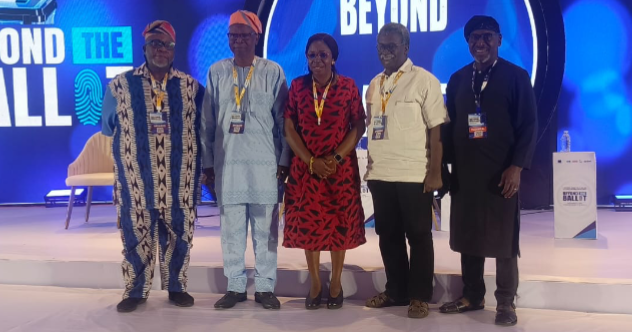
They made the calls at the conclusion of a national summit themed Beyond the Ballot: Safeguarding Electoral Information Integrity in the Age of AI, sponsored by the European Union and facilitated by IPC and others to examine the impact of emerging technologies and foreign information manipulation on Nigeria’s democratic process.
The summit, chaired by former Independent National Electoral Commission (INEC) Chairman, Professor Attahiru Jega, brought together media professionals, academics, technology experts, civil society organisations and electoral stakeholders.
Delivering his assessment after the summit, Atabatere, who leads the Bootstrap Africa think tank, expressed cautious optimism about INEC’s preparedness for the 2027 elections, noting that the commission’s actual capacity to manage emerging technological threats would become clearer during the polls.
He, however, observed that the current INEC administration appeared to be introducing more checks and balances than its predecessor.
Atabatere identified transparency as his foremost priority for electoral reform, arguing that public confidence in the electoral system depends on institutions being open and accountable.
He also challenged political parties and aspirants to move beyond campaigns centred on removing the incumbent administration and present clear policy programmes backed by practical implementation strategies.
According to him, Nigerians should demand to know what candidates intend to achieve and how they plan to deliver on their promises.
Youth voices missing from democratic conversations
A major concern raised by the technology expert was the limited participation of young Nigerians in discussions about the country’s electoral and democratic future.
He observed that although the summit featured contributions from experienced academics, professionals and institutional representatives, the representation of people below 40 was relatively low.
Atabatere warned that excluding younger generations from important policy conversations could produce laws and decisions that fail to reflect their realities and aspirations.
He called for deliberate engagement between older and younger Nigerians, stressing that those who would live longest with the consequences of today’s decisions deserved a meaningful voice in shaping them.
He further questioned how stakeholders could effectively address online misinformation and digital manipulation without adequately involving young people who actively participate in digital spaces.
AI can fight the misinformation it creates
On artificial intelligence, Atabatere cautioned against treating the technology as inherently harmful, arguing that its impact depends largely on how it is deployed.
He explained that while AI could be used to generate false information, manipulate public opinion and undermine electoral credibility, the same technology could provide tools for detecting and countering disinformation.
He disclosed that his team had developed an AI-powered system capable of responding to false information in real time, insisting that combating technology-driven misinformation would increasingly require technological solutions.
He argued that the answer is not to reject artificial intelligence but to develop responsible systems that could identify and counter its misuse.
Atabatere also highlighted other initiatives by Bootstrap Africa, including Legishield.com, a legislative advocacy platform that analyses bills before the National Assembly and provides feedback and suggested corrections.
He introduced Olayo, another initiative designed to connect public institutions with private-sector organisations willing to deploy corporate social responsibility resources towards public service announcements and government communication.
He said stronger public-private partnerships could assist government in reaching communities that might otherwise be left out of important public information campaigns.
IPC seeks sustained electoral accountability
Earlier, IPC’s Director-General, Dr Lanre Arogundade, had emphasised that safeguarding electoral integrity must extend beyond election day to cover activities before, during and after voting.
He highlighted the summit’s simulation exercise, which brought together INEC officials, civil society representatives and media practitioners to demonstrate the challenges associated with electoral information manipulation.
Arogundade disclosed that recommendations and proposals from the various sessions would be harmonised into a communiqué reflecting participants’ collective positions.
The Executive Director of the Institute for Media and Society (IMS/CEMESO), Dr Akin Akingbulu, commended the European Union and its European Union Support to Democratic Governance in Nigeria (EU-SDGN) project for supporting the initiative.
He described the intervention as an important contribution to strengthening democratic institutions and promoting responsible media development.
Akingbulu also acknowledged the contributions of researchers, panellists, moderators, technical experts and the programme management team whose work provided an evidence-based foundation for the discussions.
The summit featured a keynote address by Professor Abigail Ogwezzy-Ndisika, alongside panel discussions on emerging technologies, electoral information integrity and the responsibilities of institutions, political actors and the media.
Participants renewed calls for transparency, institutional accountability, responsible AI deployment and broader democratic participation, with particular emphasis on giving young Nigerians a stronger voice.
As the 2027 elections draw closer, the message from the summit is clear: credible elections will depend not only on the integrity of the ballot but also on the information voters receive, the institutions they trust and the opportunity citizens have to shape their country’s future.
Join Our WhatsApp Community