Nigeria Urges AU To Close Gaps In Peace, Security Architecture
Princess-Ekwi Ajide
Nigeria has called on the African Union (AU) to urgently close the gaps between early warning and early action, strengthen counter-terrorism coordination and secure predictable financing for peace support operations across the continent.
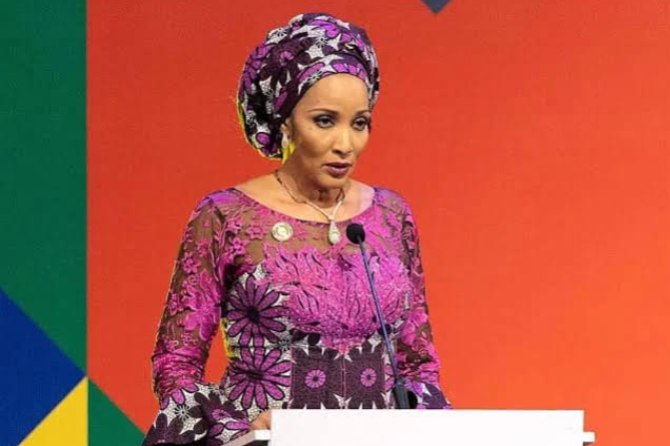
Minister of Foreign Affairs, Ambassador Bianca Odumegwu-Ojukwu, made the call on Thursday in Abuja at the opening of a Consultative Forum on Strengthening the Functional Performance of the African Union Peace and Security Architecture.
She said Africa’s peace and security system had achieved significant results but was being undermined by slow responses to emerging threats, fragmented counter-terrorism efforts, inconsistent application of continental norms and uncertain funding for peace operations.
“Early warning is sound, but early action is slow. Our operations are boldly conceived, but their financing is uncertain. Our norms are clear, but their application has been inconsistent,” she said.
The minister warned that terrorism was expanding from the Sahel towards West Africa’s coastal states, the Lake Chad Basin, the Horn of Africa, the Great Lakes and northern Mozambique.
She said terrorist groups were becoming more sophisticated, exploiting drones, illicit financial flows, organised crime and illegal artisanal mining to expand their operations.
Odumegwu-Ojukwu also linked Africa’s security challenges to growing geopolitical competition and the weakening of the multilateral system, saying the continent must build a more resilient, better-resourced and self-reliant security architecture anchored on African leadership.
She urged the AU to strengthen its Continental Early Warning System by providing the Peace and Security Council with short, timely and decision-oriented briefs containing concrete response options.
Nigeria also proposed a coordinated mediation mechanism involving the AU, Regional Economic Communities and Regional Mechanisms and the United Nations to prevent duplication and competing mediation efforts.
The minister called for a vetted roster of African mediators and technical experts who could be deployed within days to address crises involving constitutionalism, power-sharing, security sector reform and ceasefires.
On terrorism, she stressed that military responses alone could not address the grievances driving violent extremism, urging greater attention to youth unemployment, weak governance and community resilience.
She called for the full utilisation of the African Union Counter-Terrorism Centre as the continental focal point for counter-terrorism coordination, alongside stronger intelligence sharing among Member States and agencies such as the Committee of Intelligence and Security Services of Africa (CISSA).
Nigeria, she added, supported rehabilitation and reintegration programmes for former extremists, warning that poorly defined counter-terrorism laws and weak oversight could undermine public trust and create conditions for recruitment.
On peace support operations, Odumegwu-Ojukwu urged the United Nations to urgently implement Security Council Resolution 2719, adopted in December 2023, which provides a framework for financing AU-led peace support operations through UN assessed contributions.
She said declining UN peacekeeping and partner funding had placed additional pressure on AU-led missions, causing uncertainty in planning and delays in troop entitlements.
The minister also called for the urgent operationalisation of the African Standby Force and stronger regional standby arrangements backed by strategic enablers.
According to her, strengthening Africa’s peace and security architecture requires five priorities: bridging the gap between early warning and early action; consistent application of AU norms; clearer division of labour among the AU, regional bodies and the UN; predictable and sustainable financing; and combining military responses with governance-led prevention.
The two-day forum will focus on mediation, dialogue and preventive diplomacy; early warning and response; counter-terrorism; and peace support operations.
The minister said Nigeria expected the deliberations to produce “practical, implementable” recommendations capable of securing the commitment of AU Member States.
She noted that Abuja had a historic place in Africa’s integration efforts, recalling that the Treaty establishing the African Economic Community was signed in the Nigerian capital in 1991.
She said the aspirations of African unity and shared prosperity could not be achieved without peace, security and stability.
The forum brings together AU officials, regional organisations, UN representatives, former AU peace and security officials, eminent persons, experts and other stakeholders.
Join Our WhatsApp Community