Experts Warn Of ‘Family Values’ Threat To Women’s Rights Ahead Of UNGA81
The battle over women’s rights is increasingly being fought in the language of “family”, “culture”, “religion” and “sovereignty” raising concerns that such narratives could be used to weaken hard-won protections for women and girls.
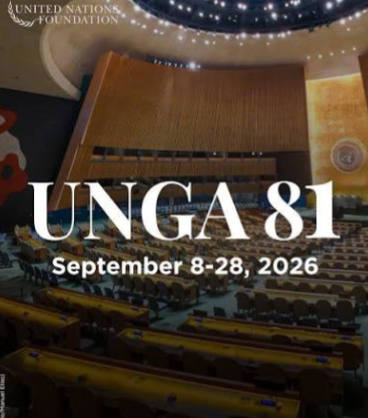
That warning emerged at a SHE & Rights session ahead of the 81st United Nations General Assembly, where rights experts called for stronger implementation of existing African human-rights instruments and greater engagement with communities beyond traditional human-rights circles.
Dr Robert Eno, Registrar of the African Court on Human and Peoples’ Rights, said there is currently no indication that a proposed African Charter on “family sovereignty and values” is scheduled for consideration by the African Union Assembly.
Eno stressed that the draft was not proposed by the African Union and would have to undergo a lengthy institutional process before reaching the Assembly.
He therefore expressed doubt that it would be considered by February 2027.
But he warned against complacency, saying the wider struggle goes beyond a single proposed charter.
Discriminatory practices, including unequal inheritance rights, restrictions on divorce and failure to recognise marital rape, continue to affect women and girls.
He urged advocates to take the gender-equality conversation into homes, schools, places of worship, traditional institutions and social media, arguing that rights advocacy must engage people who may disagree with or fear the human-rights agenda.
Rehema Namukose of Musawah said “family values”, cultural integrity and sovereignty were increasingly being used to delay reforms on marriage, divorce, custody and women’s equal rights, while restrictive legislation was gaining political traction in parts of Africa.
Samah Hadid, Global Executive Director of Musawah, similarly called for religious and cultural traditions to be reclaimed as tools for gender justice rather than discrimination. She said anti-rights movements were becoming increasingly coordinated and better resourced.
The session also raised concerns over the implementation of the African Union Convention on Eliminating Violence Against Women and Girls (AU CEVAWG). Fatou Bantou Salah of ISLA called for a pause in further ratification to allow an independent, article-by-article legal review and wider consultation with survivors, women’s rights groups and affected communities.
Meanwhile, Vimbai Kapurura of Girls Not Brides highlighted the gap between health infrastructure and actual access for adolescent girls in Eswatini, while Khaled Hassine of the UN Inter-Governmental Working Group on the Human Rights of Older Persons stressed the importance of civil-society participation in negotiations for a legally binding treaty on older people’s rights.
The speakers agreed on one central point: having rights on paper is not enough.
Governments must implement their commitments, communities must be part of the conversation, and accountability mechanisms must work if Africa is to prevent reversals of progress on equality and human dignity.
Join Our WhatsApp Community