Left To The Streets: The Hidden Crisis Of Almajiri Children In Abuja’s Runji Community
Anthony Eze
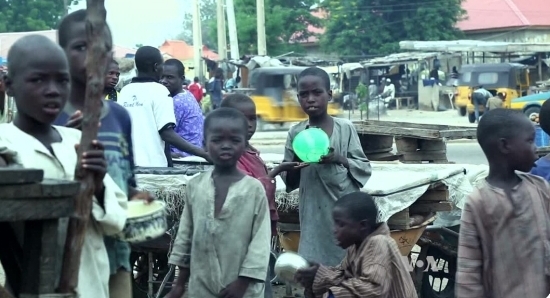
RUNJI, ZUBA (ABUJA), Every day, under the harsh Abuja sun, young boys clutching plastic bowls wander the dusty streets of Runji, moving from door to door in search of food. For them, survival has quietly replaced childhood.
What was once a revered system of Islamic learning is now, for many, a pipeline into neglect.
In this quiet community on the outskirts of the nation’s capital, the Almajiri system, designed to teach the Qur’an, has taken on a troubling reality: children far from home, with little care, limited protection, and no access to structured education.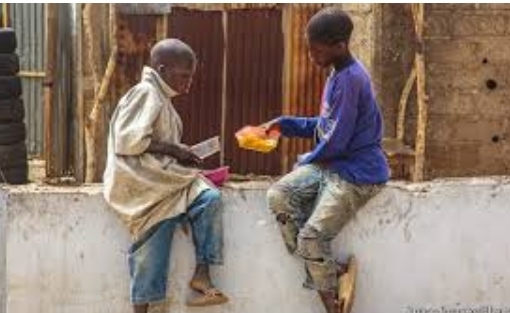
Between Faith and Neglect
An Islamic teacher, Salisu Isah, insists the system still serves a purpose.
“The goal is to teach them the Qur’an,” he explains. “But many parents have abandoned responsibility. The children roam because we too have families to cater for.”
His words reveal a system stretched beyond its limits, where responsibility is shared, yet accountability is blurred.
Across northern Nigeria, organisations like UNICEF have repeatedly raised concerns about out-of-school children, warning that millions remain vulnerable without formal education or protection.
A Community on Edge
For residents, compassion is slowly giving way to concern.
A trader, Maryloveth, says the children’s presence is constant, and complicated.
“They come to beg almost every day. Some people help, but others are now afraid because of theft.”
What began as sympathy is, for some, turning into suspicion, creating tension between survival and security.
The Education They Never Get
For Mrs Otokpa, a local teacher, the real danger lies in what these children are missing.
“Without formal education, they struggle to integrate into society. Both Islamic and Western education should work together, but right now, that balance is missing.”
The result is a generation growing up on the margins, equipped with faith, but disconnected from opportunity.
Why Parents Still Send Them Away
Despite the hardship, some parents defend the system.
A Muslim parent, Mrs Zulia Abdulmalik, says distance is intentional.
“When they leave home, they take learning more seriously.
But feeding them is a major challenge.”
Others, like Mr Luka Akukah, argue the system must evolve.
“It does not align with modern education. Government must reform it, introduce structure, curriculum, and proper support.”
A Cycle Waiting to Be Broken
Government efforts through agencies like the Universal Basic Education Commission (UBEC) have attempted to integrate Qur’anic and formal education.
Yet, on the streets of Runji, little appears to have changed.
During this reporter’s visit, dozens of children were seen moving through neighbourhoods, bowls in hand, hope uncertain.
Their reality raises a difficult question: how long can a system built on faith survive without structure, care, and accountability?
Until answers come, the streets remain their classroom, and survival, their daily lesson.
Follow the Savinews Africa channel on WhatsApp: https://whatsapp.com/channel/0029VawgaEL5vKA9Y5XTFg0n