China Pledges Stronger Ties With Nigeria Through Governance Reforms
China has pledged to deepen its development partnership with Nigeria, with a focus on governance, economic reforms, trade and technological innovation, as Beijing pushes its modernisation agenda through stricter internal party discipline and anti-corruption measures.
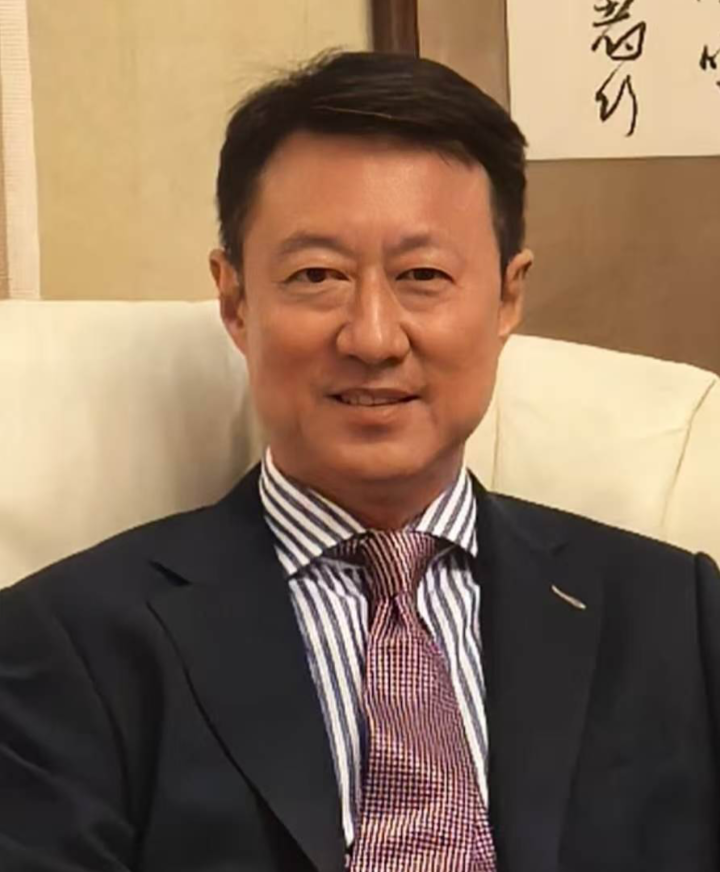
Chinese Ambassador to Nigeria, Yu Dunhai, made the commitment while reflecting on the outcome of the Fifth Plenary Session of the 20th Central Committee of the Communist Party of China (CPC), which he said had reinforced China’s determination to pursue modernisation through what he described as the party’s self-revolution.
In an article titled Leading Chinese Modernisation Steadily Forward Through the Party’s Self-Revolution, the ambassador said China’s experience demonstrated the importance of strong governance, accountability and the ability of political institutions to identify and correct their shortcomings.
He maintained that the CPC’s campaign against corruption and its commitment to full and rigorous self-governance had strengthened the party’s capacity to lead national development.
According to him, the approach has contributed to China’s economic growth, industrial expansion and long-term social stability.
Dunhai cited China’s extensive industrial system, its manufacturing strength and the growth of a middle-income population exceeding 400 million people as evidence of the country’s development progress.
He also said China had lifted hundreds of millions of rural residents out of poverty and historically addressed absolute poverty.
On China’s global economic role, the ambassador said the country had contributed approximately 30 per cent of global economic growth for several consecutive years, describing it as an important stabilising force in the world economy.
He argued that China’s continued commitment to reform and opening-up would create opportunities for other countries, particularly developing nations seeking independent pathways to modernisation.
Turning to Africa, Dunhai described the continent as a key partner in China’s modernisation journey and highlighted the Forum on China-Africa Cooperation (FOCAC) as an important platform for strengthening relations.
He recalled the 2024 FOCAC Beijing Summit, where Chinese President Xi Jinping announced the Ten Partnership Actions to advance China-Africa modernisation cooperation.
The ambassador also highlighted China’s implementation, from 1 May 2026, of zero-tariff treatment for all African countries with which it maintains diplomatic relations.
He said the measure was intended to expand African exports, strengthen trade relations and support industrial transformation across the continent.
On Nigeria-China relations, Dunhai said his more than two years in Nigeria had exposed him to the country’s strong demand for good governance, stability and a development model suited to its national circumstances.
He noted that Nigeria was pursuing structural reforms, attracting foreign investment, expanding international trade and promoting technological innovation to strengthen its economic foundations.
The ambassador said the comprehensive strategic partnership between Nigeria and China had entered a new phase of high-quality development under the leadership of Presidents Xi Jinping and Bola Ahmed Tinubu.
He added that both countries were deepening exchanges on governance and aligning their development priorities to strengthen practical cooperation across different sectors.
Dunhai stressed that China had no intention of exporting its development model or imposing political conditions on other countries, insisting that every nation should have the freedom to choose its own development path.
He said Beijing remained willing to share its governance experience with political parties and organisations around the world through equal exchanges.
The ambassador reaffirmed China’s commitment to expanding international cooperation, safeguarding global peace and promoting shared development.
He expressed optimism that Nigeria and China would continue to work together on the basis of equality, mutual learning and mutual benefit, particularly in advancing the interests of countries in the Global South.
Join Our WhatsApp Community