Nigeria’s Children Pay The Price For Gaps In Early Development – Experts
Princess-Ekwi Ajide
For a child born in Nigeria today, the first five years could determine how well they learn, how healthy they remain and how much they eventually contribute to the country’s economy.
Yet experts say millions of Nigerian children are growing up without the nutrition, healthcare, responsive care, protection and early learning opportunities needed to build that foundation.
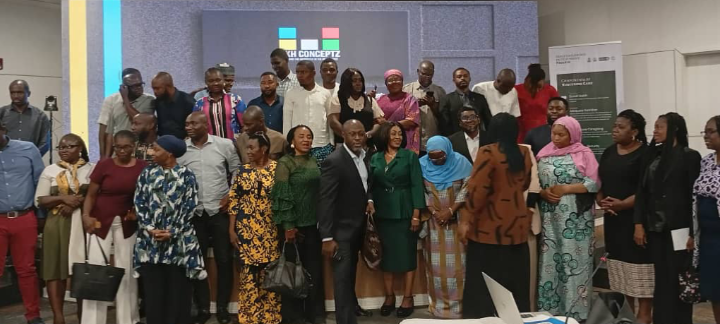
Speaking at a stakeholder engagement on Early Childhood Development (ECD), in Abuja, Dr Gloria Ahmed described investment in Early Childhood Development (ECD) as a strategic investment in Nigeria’s future prosperity.
Ahmed said children’s earliest experiences, from nutrition, care and protection to stimulation and learning, have lasting implications for their health, educational attainment, productivity and contribution to national development.
She called for stronger collaboration among governments, development partners, civil society organisations, communities, parents and caregivers, stressing the need for effective coordination, evidence-based planning, adequate financing and transparent monitoring of ECD programmes
Dr Ritgak Tilley Gyado, representing the World Bank, said investment in the earliest years was critical to improving Nigeria’s human capital and future productivity.
She noted that Nigeria has about 18 million children under five, describing them as a critical constituency whose development would shape the country’s future.
Gyado said Nigeria’s Human Capital Index remained significantly below the global average, stressing that closing the gap would require action across government and society.
She said the World Bank had been working with the Nigerian government to identify constraints to human capital development, while acknowledging reforms in health, education, social protection and women’s economic empowerment.
Also speaking, Prof. Oluwatosin Olorunmoteni stressed that the first five years are a critical period for brain development, with nutrition, responsive caregiving, stimulation, play, safety and protection all contributing to a child’s ability to learn and thrive.
She said the quality of a child’s early experiences determines the foundation upon which later skills are built, warning that children who enter school without that foundation may struggle to benefit fully from education.
Olorunmoteni said only about 7.7 per cent of Nigerian children are developing on track, describing the figure as a major concern that requires urgent, coordinated action.
Representing Dr Ado Muhammad, Dr Zainab called for ECD to be treated as a cross-sectoral development priority rather than the responsibility of the health or education sectors alone.
She said investment in quality ECD could yield returns of about $19 for every dollar invested, through improved health, education and productivity later in life.
The speakers called for stronger collaboration among government ministries and agencies, civil society organisations, development partners, communities, traditional and faith institutions and the private sector.
They stressed that the solution does not necessarily require new structures, but better coordination of existing services around the child.
For Nigeria, the message from the engagement was simple: the country’s future human capital is being shaped now, one child, one family and one community at a time.
Join Our WhatsApp Community