Nasarawa Opens Crucial Health Summit, Seeks Action Beyond Promises
For millions of Nigerians who still struggle to access quality healthcare, the difference between a policy announcement and a functioning health facility can mean the difference between life and death.
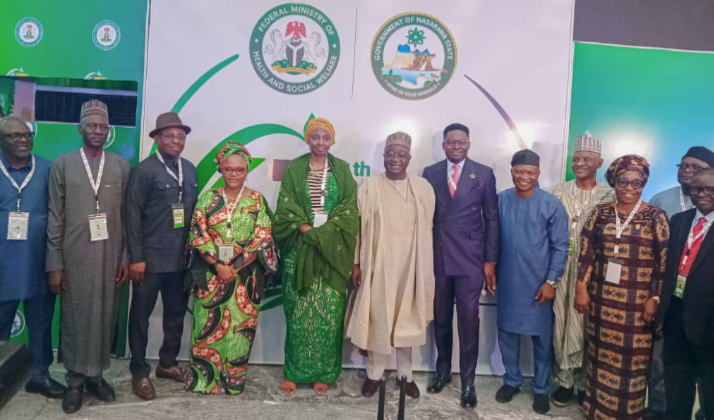
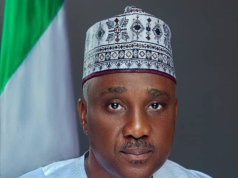
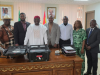
That challenge took centre stage in Lafia as Nasarawa State Deputy Governor, Dr Emmanuel Akabe, declared open the Technical Session of the 67th National Council on Health (NCH), with a call for practical decisions that will translate government commitments into better healthcare outcomes.
Akabe, who represented Governor Abdullahi Sule at the opening ceremony, said the state was honoured to host the national gathering, expressing appreciation to the Federal Ministry of Health and Social Welfare for selecting Lafia as the venue.
He challenged health sector leaders to ensure that discussions under the theme, “From Commitment to Results: Delivering Quality and Equitable Healthcare for All Nigerians”, produce measurable improvements in healthcare delivery across the country.
The Deputy Governor, a former Nasarawa State Commissioner for Health between 2011 and 2015, said he was confident that the technical deliberations and eventual communiqué would generate actionable recommendations to strengthen the health system.
He also reaffirmed the state government’s commitment to supporting national health reforms, describing the meeting as an opportunity to showcase Nasarawa’s peaceful environment and hospitality.
Earlier, the state Commissioner for Health, Dr Gwamna Gaza, welcomed delegates and described Nasarawa’s selection to host the 67th Council as a historic opportunity.
He recalled that the state was unanimously endorsed to host the meeting during the 66th National Council on Health in Calabar, Cross River State, about 12 months ago.
Gaza urged participants to take their responsibilities seriously, noting that decisions reached at the Council would affect not only the wider population but also health sector leaders themselves, who are equally beneficiaries of the policies they formulate.
He assured delegates of the state’s support throughout the meeting and encouraged them to raise any concerns requiring attention.
Four priorities dominate technical deliberations
Presenting the proceedings, the Permanent Secretary of the Federal Ministry of Health and Social Welfare and Chairman of the Technical Committee, Daju Kachollom S, said the two-day technical session, scheduled for 16-17 November 2026, would lay the groundwork for the main Council meeting on 19-20 November.
The main meeting will be chaired by the Coordinating Minister of Health and Social Welfare.
Kachollom explained that the Technical Committee would review the implementation of resolutions from the 66th Council meeting, consider memoranda submitted by the Federal Government, states and other ministries, and develop recommendations for consideration by the full Council
She disclosed that submissions had been grouped around four pillars of the Health Sector Strategic Blueprint:
Effective governance.
An efficient, equitable and quality health system.
Unlocking value chains.
Health security.
Key issues for consideration include implementation of the National Health Act, multisectoral health interventions, clinical research and development, and strengthening Nigeria’s capacity to detect and respond to public health emergencies.
These include cholera, Lassa fever, cerebrospinal meningitis and measles.
The Permanent Secretary also highlighted the importance of technology-driven coordination, disclosing that meeting documents had been uploaded onto tablets provided to participants through the Council’s electronic documentation system.
She urged delegates to make concise, meaningful contributions and focus on recommendations that could accelerate access to quality and affordable healthcare.
The technical session will also examine ways to strengthen primary healthcare, improve data-driven decision-making, expand digital health and address inequalities in access to healthcare, particularly among vulnerable populations.
Kachollom, who announced that the 67th Council would be her final meeting, called on participants to make the deliberations count.
With the technical discussions now underway, attention will turn to whether the resolutions emerging from Lafia can move beyond official communiqués to deliver tangible improvements in hospitals, primary healthcare centres and communities across Nigeria.
For ordinary Nigerians, the real measure of success will not be the number of resolutions adopted, but whether quality healthcare becomes easier to access when they need it most.
Join Our WhatsApp Community