2027 Elections: INEC Moves To Protect Voters, Warns Against Deadly ‘Rig and Die’ Slogan
For millions of Nigerians hoping to exercise their voting rights in January 2027, a social media rumour could be enough to keep them away from the polling station.
INEC is now warning that misinformation, political threats and failure to collect Permanent Voter Cards (PVCs) could undermine the credibility and safety of the elections.
The Independent National Electoral Commission (INEC) has warned Nigerians against spreading false claims that voters can participate in the 2027 general elections without their PVCs, insisting that no voter will be accredited without the card.
The Commission also condemned the growing use of the slogan ‘rig and die’, describing it as dangerous rhetoric capable of inciting violence against voters and electoral officials.
The warnings came as INEC intensified preparations for the 2027 elections, unveiling fresh operational safeguards and securing the commitment of the National Universities Commission (NUC) to provide credible academic personnel for election duties.
Speaking through the Deputy Director of Information and Publicity, Wilfred Ifogah, at a media engagement in Abuja, National Commissioner and Chairman of INEC’s Information and Voter Education Committee, Mohammed Kudu Haruna, said the claim that the Bimodal Voter Accreditation System (BVAS) had made PVCs unnecessary was false.
He cited Section 47(1) of the Electoral Act 2026, which requires voters to present valid PVCs for accreditation.
“ No PVC, no accreditation; no accreditation, no ballot paper,” he stressed.
Haruna warned that voters who believed the misinformation could arrive at polling units without their cards and be denied the opportunity to vote, creating avoidable tension and suspicion.
He urged Nigerians yet to collect their PVCs to do so without delay.
The National Commissioner also took aim at the slogan ‘rig and die’, warning that language linking electoral offences to death could create a climate of hostility, particularly at polling units where ordinary Nigerians and ad hoc election workers are most exposed.
He stressed that electoral offences must be addressed through the law, not threats or mob action, noting that rigging attracts penalties under the Electoral Act.
Haruna urged political leaders, supporters and media organisations to reject inflammatory language and avoid amplifying threats of violence.
He also challenged journalists and social media analysts to strengthen fact-checking ahead of the elections, warning that viral posts, doctored images, fake accounts, cloned voices and AI-generated videos could distort public perception and undermine confidence in the process.
“Ethical election reporting is not a favour to INEC; it is a service to the public,” he said.
He recalled that vote buying was a major concern during the June Ekiti governorship election, while AI-generated content and false claims about ghost and hired voters circulated during the August Osun election.
INEC also disclosed plans to conduct a nationwide mock accreditation and result transmission exercise on Saturday, 28 November, across all 36 states and the Federal Capital Territory.
The exercise will take place in two polling units per Registration Area, with polling units opening at 8.30 a.m. and accreditation running until 2.30 p.m.
It will test BVAS and the uploading of polling unit results to the INEC Result Viewing Portal (IReV).
Haruna clarified that the exercise was strictly a test, with no winners or losers to be declared.
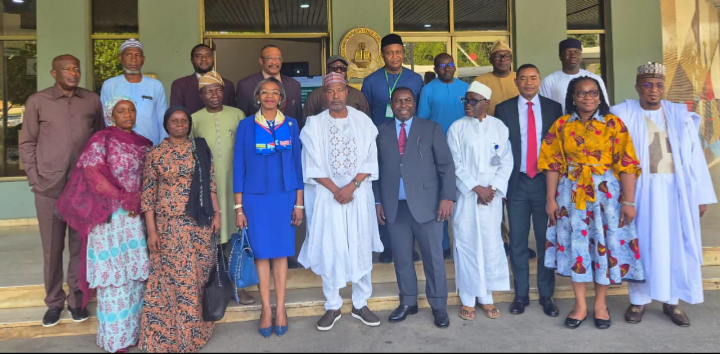
Meanwhile, INEC Chairman, Prof. Joash Amupitan, has secured the NUC’s commitment to mobilise credible academics for the elections and adjust university calendars to accommodate the electoral timetable.
At a separate meeting in Abuja, NUC Executive Secretary, Prof. Abdullahi Yusufu Ribadu, pledged to engage vice-chancellors on the nomination of non-partisan academic staff and issue a circular to universities following a formal request from INEC.
Amupitan said academics had remained central to Nigeria’s electoral process, particularly as collation and returning officers, but noted that the Commission was introducing additional safeguards to protect them.
Among the measures are automated arithmetic consistency and over-voting checks on polling unit results, the procurement of 57,000 new BVAS devices and a reduction of the voter-to-device ratio to 850.
He also disclosed that the Inter-Agency Consultative Committee on Election Security (ICCES) had been decentralised to local government and registration area levels, with dedicated security arrangements around collation centres.
The INEC Chairman said Sections 96 and 97 of the Electoral Act 2026 criminalise violence, abusive rhetoric and threats against electoral personnel, while Section 148 empowers the Commission to prosecute offenders directly.
“No Returning Officer or Collation Officer will be left to stand alone against lawlessness,” he assured.
Ribadu, in response, said universities could consider a three-to-four-week break during the election period to avoid disrupting academic activities.
He also proposed broader collaboration with INEC in electoral research, student internships and studies in artificial intelligence, robotics and data analytics.
The media engagement, attended by representatives of the Nigeria Union of Journalists (NUJ), Nigerian Institute of Social Media Analysts (NISMA), newspaper proprietors and media executives, also highlighted concerns over declining voter participation.
INEC recalled that only 26.72 per cent of registered voters participated in the 2023 presidential election, urging journalists to intensify public education on PVC collection, voter turnout and the dangers of vote buying.
The Commission said it was targeting the deployment of election officials and materials to polling units by about 7.30 a.m. on election day to reduce delays that could fuel suspicion.
The Presidential and National Assembly elections are scheduled for 16 January 2027, while governorship and State Houses of Assembly elections will hold on 6 February 2027.
With the elections approaching, INEC says its preparations will depend not only on technology and security but also on the public’s ability to distinguish facts from falsehood.
For voters, the message is straightforward: collect your PVC, verify information before sharing it and reject violence in the name of defending the ballot.
Join Our WhatsApp Community