Hope For Ebola-hit Congo As $36m Vaccine Deal Advances
Princess-Ekwi Ajide
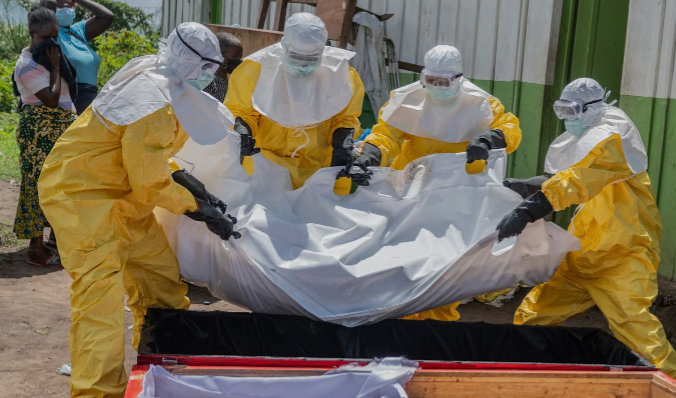
For families in the Democratic Republic of the Congo (DRC) who have lost loved ones to Ebola, the search for protection against the deadly disease has gained fresh momentum with a $36 million vaccine development award.
The funding, announced by global non-profit biomedical research organisation IAVI, will support the development, manufacturing and clinical evaluation of a single-dose vaccine candidate against Bundibugyo virus (BDBV), a strain of Ebola responsible for the ongoing outbreak in the DRC.
The award comes as the country battles its second-largest Ebola outbreak on record, with 9,765 confirmed cases and 4,727 deaths as of October 21, 2026, according to figures contained in the announcement.
The outbreak could become the largest Bundibugyo virus epidemic ever recorded.
The $36 million award is part of a contract valued at up to $99 million from the Biomedical Advanced Research and Development Authority (BARDA), under the United States Department of Health and Human Services.
The funding will support the production of vaccine doses for clinical trials and outbreak response, regulatory activities and a Phase 1 clinical trial. It will also provide for expanded manufacturing and development of an updated vaccine candidate targeting the viral variant responsible for the 2026 outbreak.
IAVI will lead the programme in partnership with Hilleman Laboratories, SK bioscience and IDT Biologika, bringing together expertise in vaccine development, manufacturing and large-scale production.
Under the arrangement, Hilleman Laboratories will produce initial doses for clinical evaluation, SK bioscience will lead manufacturing scale-up, while IDT Biologika will handle the filling and finishing of doses for stockpiling.
The partnership also aims to improve manufacturing efficiency, reduce production costs and strengthen access to vaccines during future outbreaks.
IAVI President and Chief Executive Officer, Dr Mark Feinberg, said the award would strengthen partnerships and accelerate the development of a vaccine addressing a critical public health need.
He said the collaboration would combine IAVI’s experience in vaccine development and clinical advancement with the manufacturing capabilities of its partners.
A major concern, however, remains the absence of approved vaccines or expertise in vaccine development, manufacturing and large-scale production.
Under the arrangement, Hilleman Laboratories will produce initial doses for clinical evaluation, SK bioscience will lead manufacturing scale-up, while IDT Biologika will handle the filling and finishing of doses for stockpiling.
The partnership also aims to improve manufacturing efficiency, reduce production costs and strengthen access to vaccines during future outbreaks.
IAVI President and Chief Executive Officer, Dr Mark Feinberg, said the award would strengthen partnerships and accelerate the development of a vaccine addressing a critical public health need.
He said the collaboration would combine IAVI’s experience in vaccine development and clinical advancement with the manufacturing capabilities of its partners.
A major concern, however, remains the absence of approved vaccines or specific treatments for disease caused by Bundibugyo virus.
The proposed vaccine is designed to provide protection through a single dose, an approach that could simplify mass vaccination during emergencies.
IAVI said the candidate had demonstrated high-level protective efficacy within days of vaccination in non-human primate studies, although it has not yet been evaluated in humans.
The World Health Organisation had previously identified it as the most promising Bundibugyo vaccine candidate in development.
The ultimate goal is to make the vaccine available for a planned ring vaccination trial in the DRC following Phase 1 evaluation.
The BARDA-funded programme complements ongoing work supported by the Coalition for Epidemic Preparedness Innovations (CEPI), which is also backing efforts to accelerate vaccine development and outbreak response.
While the new funding marks an important step towards a potential vaccine, its effectiveness in humans will still need to be established through clinical trials.
For communities facing the current outbreak, the development offers renewed hope, but the urgent need remains to contain infections, protect lives and strengthen preparedness against future epidemics.
Join Our WhatsApp Community