Twelve Years On, Let Their Sacrifice Never Become A Statistic
By Edward Gabkwet
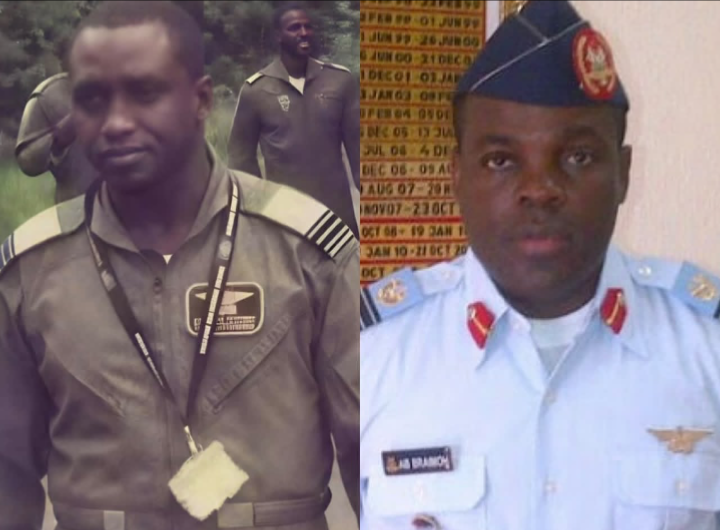
Twelve years ago, two Nigerian Air Force pilots took to the skies on a combat mission against Boko Haram in Nigeria’s troubled North-east. Only one returned in the conventional sense. The other was never seen again.
Group Captain Abdulrasheed Bamidele Braimoh and Wing Commander Chimda Hedima were flying Alpha Jet NAF 466 when the aircraft went down near Kauri, in Konduga Local Government Area of Borno State, on 12 September 2014.
Hedima was subsequently captured and killed by terrorists, while Braimoh was declared Killed in Action in accordance with the provisions of the Armed Forces of Nigeria.
Twelve years later, their story raises a question that should concern every Nigerian: have we become too accustomed to the human cost of defending this country?
A military casualty is often reduced to a figure in a situation report or a headline. But behind every name is a family. A child loses a parent.
A spouse becomes a widow or widower.
Parents bury a son or daughter. Colleagues return to the battlefield without someone who stood beside them only days earlier.
This is the human cost that casualty figures cannot capture.
In a democracy, citizens have every right to question military operations, demand accountability and debate their outcomes.
But criticism should not make us lose sight of the men and women who carry out those operations.
The pilot who straps into a combat aircraft does not know with certainty whether he will return to base.
Neither does the soldier moving into a forward position, the sailor operating in dangerous waters o,r the paramilitary officer confronting a threat on behalf of the public.
Yet they go.
That willingness to place one’s life in danger for the safety of others is among the most demanding forms of public service.
Braimoh and Hedima did so on 12 September 2014.
They were not alone. Nigeria’s counter-terrorism and counter-insurgency campaigns have claimed the lives of many military and para-military personnel.
Some died in major battles; others were killed in ambushes, improvised explosive device attacks or assaults on isolated positions.
Many left behind stories that never reached the national consciousness.
We should do better.
Honouring fallen personnel must mean more than remembering them when coffins are draped in the national flag or during Armed Forces Remembrance Day.
Nigeria needs a permanent and accessible national record of its fallen service personnel, their names, photographs, service histories and stories, while their families should remain part of the nation’s consciousness.
Young Nigerians should also learn that citizenship is not only about what we receive from our country. For some, it has meant giving everything they had to protect it.
As we remember Braimoh and Hedima twelve years after NAF 466 disappeared from the skies over Borno, we must remember the many others who never returned from similar missions.
They were more than casualty figures. They were Nigerians with families, dreams and futures.
May we never become so accustomed to the sacrifices of our Armed Forces and other security agencies that we stop seeing the human beings behind the uniforms.
May we never forget Braimoh, Hedima and the many who went before and after them.
And may Nigeria always remain worthy of the sacrifices made in her defence.
Gabkwet, an Air Vice Marshal, writes from Abuja.
Join Our WhatsApp Community