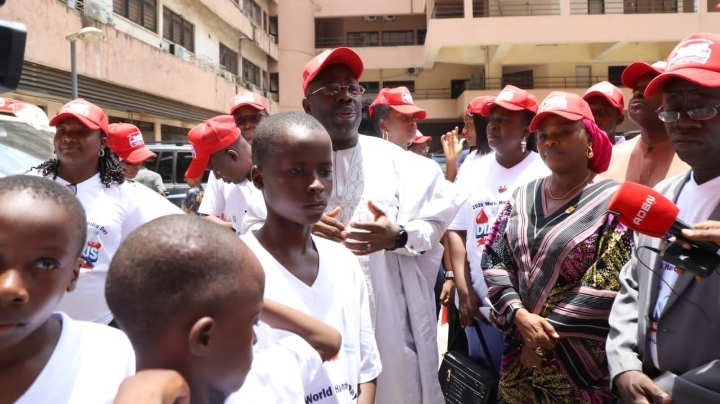
Hidden Crisis: Nigeria Moves To Tackle Widespread Under-Diagnosis Of Haemophilia
In a country where thousands may be living with a life-threatening condition unknowingly, Nigeria is taking a decisive step to close a dangerous diagnosis gap.
The Federal Government has announced plans to integrate haemophilia and other inherited bleeding disorders into maternal and child health services at primary and secondary healthcare levels.
The move is aimed at improving early detection and access to comprehensive care for affected individuals.
The Coordinating Minister of Health and Social Welfare, Muhammad Ali Pate, revealed the initiative during a press briefing in Abuja to mark the 2026 World Haemophilia Day.
Represented by Dr Kamil Shoretire, he expressed concern that while an estimated 21,101 Nigerians live with haemophilia, only about three per cent have been diagnosed, highlighting a critical public health gap.
He warned that poor awareness and limited expertise among healthcare providers are contributing to underdiagnosis, preventable complications, and avoidable deaths.
According to him, the theme of this year’s commemoration, “Diagnosis: The First Step to Care,” underscores the urgent need to prioritise early detection.
“Early diagnosis is the difference between life and preventable complications, between disability and productivity,” he said.
As part of efforts to strengthen response systems, the government has launched a National Bleeding Disorders Registry and announced the rollout of the “Road to Clot Initiative.”
The programme, in collaboration with the World Federation of Haemophilia and the Haemophilia Foundation of Nigeria, will focus on identifying undiagnosed patients, linking them to care centres, and ensuring long-term treatment support.
Officials say the initiative also includes community-based screening, improved diagnostic capacity, and stronger data systems.
Five ambulances have been deployed to reach underserved and remote communities, signalling a more proactive approach to case finding.
Experts and advocates at the event stressed that beyond medical care, haemophilia continues to impose social, economic, and psychological burdens on patients and families.
They called for sustained awareness, genetic counselling, and multi-sector collaboration to address the condition effectively.
With these new measures, Nigeria is positioning itself to transform haemophilia care, moving from silence and stigma to early diagnosis and structured support.
Follow the Savinews Africa channel on WhatsApp: https://whatsapp.com/channel/0029VawgaEL5vKA9Y5XTFg0n