At the Frontlines Of TB: How India’s Hidden Heroes Are Saving Lives Among The Homeless
In the global fight against tuberculosis (TB), the real battle is not fought in conference halls but on the streets, among the homeless, the forgotten, and the hardest to reach.
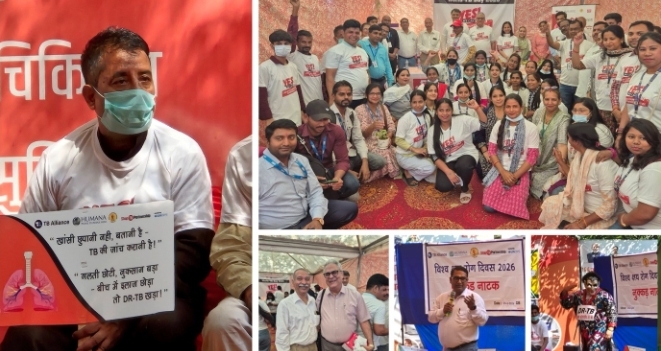
A visit to a shelter home in Delhi, India, a region with one of the highest TB incidences in a country bearing the world’s heaviest TB burden, reveals a quiet revolution driven by compassion, community engagement, and relentless frontline healthcare work.
Health experts continue to stress that TB is far more than a medical condition. It is deeply rooted in social and economic inequalities.
Those most at risk, including homeless people and migrants, are often the least likely to access timely diagnosis and treatment.
Bridging this gap are frontline workers from organisations such as Humana People to People India (HPPI), who are taking healthcare directly to vulnerable populations.
Working closely with India’s National TB Elimination Programme, these teams conduct regular screenings, link patients to free government treatment, and provide daily follow-up support to ensure adherence to the six-month therapy required for cure.
Health officials, including district TB experts in Delhi, acknowledge that without these grassroots efforts, many cases would go undetected and untreated.
Retaining patients throughout treatment remains a major challenge, particularly among transient populations, making consistent community support indispensable.
For many patients, this support is life-saving. Individuals at the shelter recounted how HPPI workers encouraged them to undergo chest X-rays and testing, guided them through treatment, and provided continuous counselling.
Their stories highlight a crucial truth: adherence to medication, proper nutrition, and sustained support are key to recovery.
Innovations are also reshaping the response. AI-enabled portable X-ray machines and mobile diagnostic vans are bringing early detection directly to high-risk communities.
Meanwhile, preventive therapies and rapid molecular tests are improving outcomes, even for drug-resistant TB cases, where newer six-month regimens now boast success rates of up to 95 per cent.
Equally powerful is the role of TB survivors turned advocates. Individuals like Nisha, who overcame both drug-sensitive and drug-resistant TB, are now on the frontlines, helping others navigate the same journey.
Their lived experiences are breaking stigma and inspiring trust within vulnerable communities.
Experts believe that ending TB, a disease that has plagued humanity for over 10,000 years, is now within reach.
But success hinges on one critical factor: ensuring no one is left behind.
As India scales up efforts through community partnerships, technology, and survivor-led advocacy, one message rings clear, to end TB, the world must prevent, find, and treat every single case, especially among those most often overlooked.
Follow the Savinews Africa channel on WhatsApp: https://whatsapp.com/channel/0029VawgaEL5vKA9Y5XTFg0n