Indian Researchers Achieve 0% ICU Deaths From Superbugs.
A Breakthrough Calling for Global Action Against Misinformation
In a world where antibiotic misuse is rising and superbugs continue to outsmart modern medicine, a small hospital in Bengaluru has stunned the global health community with one result that seems almost impossible: zero deaths from hospital-acquired infections (HAIs) in its ICU.
And it all began with a simple question: What if the real solution to antimicrobial resistance is not more drugs — but preventing infections altogether?
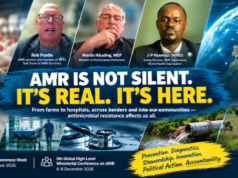
This curiosity sparked a joint research project between BRAINS Hospital, Bengaluru, and the Pragathi Rural Development Trust, inspired by the World AMR Awareness Week 2025 theme: “Act Now: Protect Our Present, Secure Our Future.”
For decades, hospitals around the world have struggled with superbugs that thrive even in spotless ICUs. A major study by the Indian Council of Medical Research across 120 ICUs revealed a grim truth:
38% of ICU patients infected with superbugs die within 14 days, despite strict hygiene and WASH protocols.
It is a tension that sits at the heart of modern healthcare:
Even when hospitals do everything right, infections still slip through.
The problem, researchers say, lies in the air and on surfaces — places that cannot be disinfected daily because traditional fogging chemicals are toxic to patients and staff.
Most hospitals fog their ICUs once a week, sometimes once every 15 days, leaving dangerous gaps where bacteria multiply unchecked.
But BRAINS Hospital took a different path.
They introduced the “Citrobioshield fogging method,” the only known disinfecting fog technology safe to use while patients and healthcare workers remain inside the ICU.
No relocation. No disruption. No toxic fumes.
The results were unprecedented.
Zero HAIs. Zero AMR cases. Zero deaths.
A breakthrough that proves the point made by Dr Yvan Hutin, Director of the WHO AMR Division:
“If infections don’t occur, resistance doesn’t arise.”
The study shows that the world’s fight against antimicrobial resistance (AMR) cannot rely on reduced antibiotic use alone.
True prevention requires daily, safe, and effective disinfection, backed by real science, not myths, assumptions, or misinformation that often circulates around hospital hygiene protocols.
Health experts say this is why member states must intensify their efforts to combat misinformation, especially false claims about infection control methods and AMR solutions.
Verified innovations like Citrobioshield fogging must be promoted with clarity, transparency, and evidence, not drowned out by misleading narrative
As the world marks WAAW 2025, the message from Bengaluru is clear:
When science leads, infections fall. When prevention works, superbugs fail. And when information is truthful and evidence-based, lives are saved.
Hospitals worldwide can contact BRAINS Hospital for further details.
Follow the Savinews Africa channel on WhatsApp: https://whatsapp.com/channel/0029VawgaEL5vKA9Y5XTFg0n