Adieu Bishop Adelakun, The Spiritual Carver With Enduring Carvings
By Peter Ajayi Dada
Though the carver may have passed on, his carvings will continue to speak for generations yet unborn.
That statement aptly captures the life and legacy of the late Bishop Julius Babatunde Akanni Adelakun, Bishop Emeritus of the old and new Oyo Diocese, who returned to his Maker on Friday, October 24, 2025, just eleven days after the transition of his bosom and childhood friend, Bishop Patrick Michael Olatunji Fagun, Bishop Emeritus of the Catholic Diocese of Ekiti.
My personal encounters with Bishop Adelakun date back to the early 1990s, when I was a young reporter with the African Newspapers of Nigeria PLC (ANN Plc), publishers of the Tribune titles, based in Ibadan.
A Bond with the Bishop and a Book that Became a Legacy
I had shared with Mr Kunle Olayokun, also of ANN Plc and a younger brother to Bishop Adelakun, my desire to write the Bishop’s biography.
He promised to relay my intention to His Lordship on his next visit to Osogbo. The Bishop granted me audience, and I promptly submitted my proposal to him.
In his characteristic humility and openness, he introduced me to his Personal Secretary, then Rev. Fr. Paul Olawoore (who later became Bishop of Ilorin Diocese), and the late Mr Iwa Oyefade, the diocesan communications officer.
He approved my proposal without hesitation and answered my questionnaire with such clarity and completeness that my task became significantly easier.
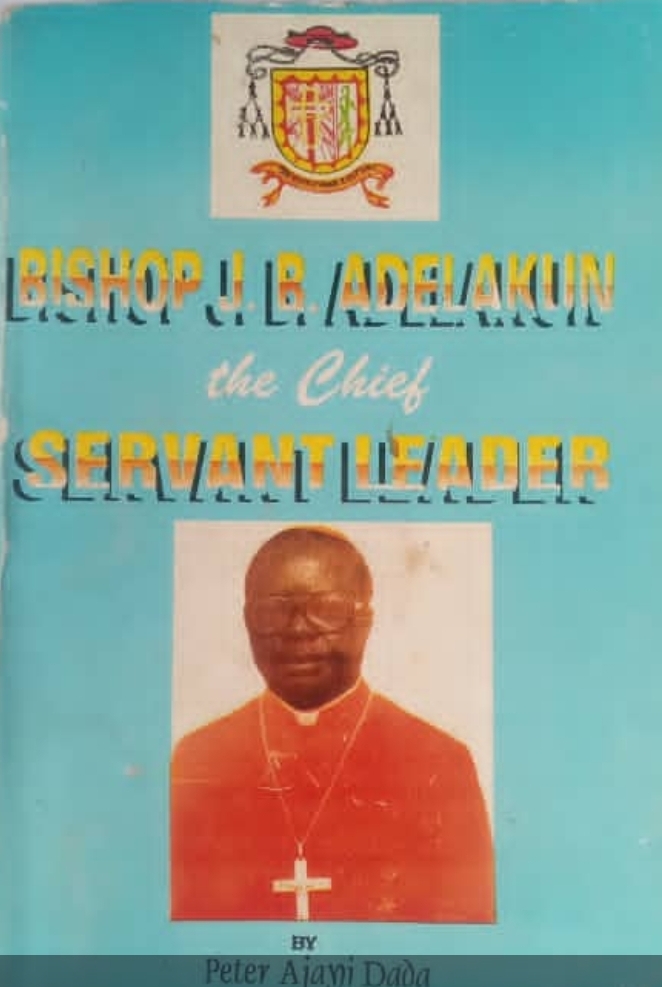
He granted me unfettered access to his personal library and archives, including rare photographs, enriching the work that would eventually become Bishop J. B. Adelakun: The Chief Servant Leader.
To this day, I remain proud to publicly showcase that book, a testament to his life of service.
It was during the course of this project that Bishop Adelakun informed me that the seat of the Oyo Diocese would be relocated from Osogbo to Oyo, while Osogbo would become the headquarters of the newly created Osogbo Diocese.
When I asked how he felt about the relocation, he described it as “sweet sorrow.”
Sweet, because Oyo Town would henceforth serve as the bishop’s seat, allowing him to deepen evangelisation and be closer to the faithful.
But sorrowful because he would miss the many friends he had made in Osogbo during his 21-year service as the local ordinary of the old Oyo Diocese.
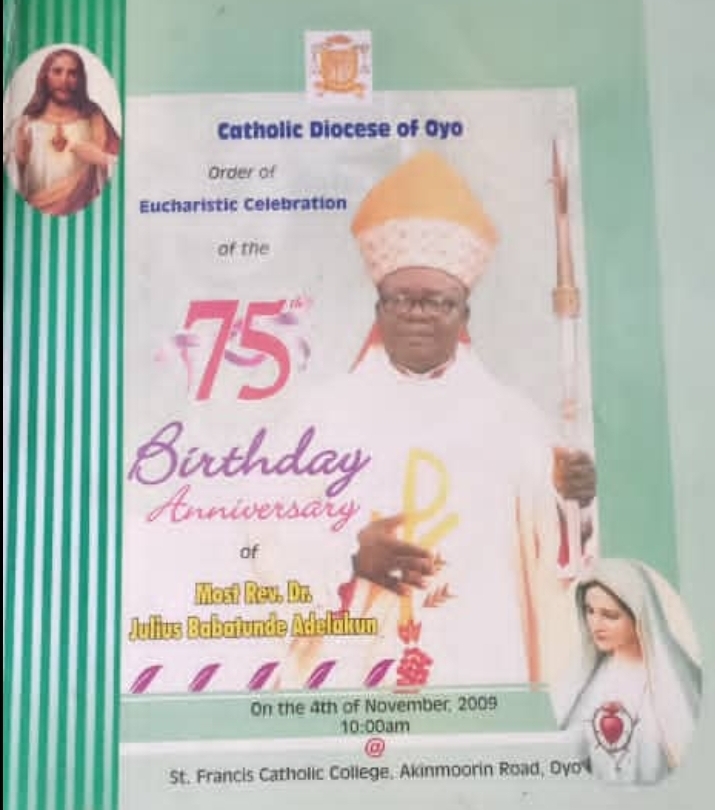
True to his vision, the launch of his biography became one of his first major public events after the relocation. For that honour, I remain deeply grateful.
The Making of a Priest and a Shepherd
Early Encounters with the Church
Born on 4 November 1934 to Mr Tella Adelakun and Mrs Tinuade Adelakun, young Babatunde’s first interactions with the Church began in his primary school days (1943–1951), under the influence of the White Fathers (Missionaries of Africa).
He served them closely, accompanying them to outstations, preparing their meals, making their beds, and serving at Mass. Passing the Latin Mass server’s test marked his first step into ministry, and only illness could keep him away from the altar.
Two years before finishing primary school, Father Jean Paul Beauchamp—one of the missionaries, asked him, “Julius, wouldn’t you like to be a priest?” The question ignited the spark that would shape his destiny.
He soon began the journey to the priesthood with his colleague, the late Msgr Joseph Ade Taiwo, at Oke-Are in January 1952, a journey that culminated in their priestly ordination on 27 June 1965.
Life in the Minor Seminary
The minor seminary experience was marked by strict discipline, sacrifice, and rigorous formation. Contact with the outside world was limited; free days came only once a month. Silence, punctuality, and self-discipline were non-negotiable virtues.
Students walked long Sunday routes through Ibadan, went barefoot on ordinary days, wore shoes only on Sundays, and slept on mats. These experiences, though challenging, shaped their character and prepared them for the priesthood.
Major Seminary and Formation of Character
Seminary life became even more demanding. Teachers were few, resources limited, and the environment required students to be hardworking, self-reliant, and creative.
Out of the 25 students who began the journey, only five, including Babatunde, made it to the priesthood:
Late Msgr Joseph Adeniyi Taiwo
Late Msgr Michael Omisesan
Late Bishop Gabriel Gonsum Ganaka (Jos)
Bishop Michael Olatunji Fagun
Bishop Julius Babatunde Adelakun
The Priesthood: Learning, Teaching, Serving
Between 1966 and 1969, Fr Adelakun studied English Language and Literature at the University of Ife (now Obafemi Awolowo University).
He later taught Philosophy and Homiletics at SS Peter and Paul Major Seminary, Bodija, Ibadan.
In December 1972, at just eight years a priest, and still settling into seminary formation work, he was appointed Auxiliary Bishop of Oyo. His episcopal ordination followed on 11 February 1973.
Bishop Owen McCoy retired four months later, making Bishop Adelakun the substantive Bishop of Oyo at age 38.
The Ministry of a Young Bishop
As a youthful bishop, ten years younger than Bishop Emmanuel Badejo was at his own appointment, Bishop Adelakun relied heavily on divine grace and the intercession of the Blessed Virgin Mary.
He often said:
“I told Mother Mary not to sleep, because I would need her day and night.”
The Missionaries of Africa, many of whom had once known him as an altar server, received him with profound humility, obeying him faithfully and modelling missionary simplicity, selfless service, and dedication.
Building People and Institutions
During his ministry, he:
Ordained about 40 priests who now serve across Oyo and Osogbo Dioceses.
Strengthened collaboration with 14 women religious congregations.
Ensured the laity retained an active, vibrant role in diocesan life.
Oversaw the historic division of the Oyo Diocese, a move that enhanced pastoral care and evangelisation.
He regarded this division as one of the greatest blessings of his ministry.
Joys, Sorrows, and the Weight of Leadership
Like every shepherd, he bore moments of deep sorrow, particularly the tragic loss of young priests to accidents and the pain of priests who left their vocation.
Yet the joys far outweighed the sorrows.
He watched the dioceses flourish in numbers, faith, and structural development.
Bishop Badejo: A Successor After His Heart
Bishop Adelakun expressed immense joy at the appointment of Bishop Emmanuel Adetoyese Badejo as his successor, praising his intellectual brilliance, pastoral experience, communication skills, and moral integrity.
He urged the faithful to support him wholeheartedly, confident that “He who has called him will not fail him.”
Partners in Mission
He spoke fondly of Missio, Misereor, and the Pontifical Mission Societies, acknowledging their indispensable contributions to building churches, mission houses, schools, and supporting the JDPM apostolate.
To him, they embodied true Christian solidarity.
Retired but Never Tired
Even in retirement, Bishop Adelakun remained indefatigable.
He once said:
“I have vowed to remain in the House of the Lord all the days of my life.”
He continued serving the Church, supporting pastoral initiatives, and promoting the Bishop Adelakun Foundation, urging all to join in sustaining the work of the faith.
A Mother’s Tears, a Son’s Conviction
The conversations between young Babatunde and his mother, Mama Maria Tinuade Adelakun, remain among the most touching elements of his story.
She struggled with the reality of her son’s priestly calling, especially the vow of celibacy, but ultimately embraced his decision with love and prayer.
On his ordination day, when the Chief Celebrant proclaimed, “It is time for Julius Babatunde Adelakun to enter into marriage with God,” Mama wept uncontrollably until a fellow worshipper comforted her, urging her to pray for him.
Her prayers never ceased, and her son never wavered.
The Final Carving of a Spiritual Craftsman
Bishop Adelakun lived, served, taught, guided, built, mentored, and shepherded with uncommon humility and steadfastness.
His “carvings,” the lives he touched, the institutions he built, the priests he formed, the gospel he preached, remain indelible.
He was truly a spiritual carver whose works live on, etched permanently in the hearts of those who encountered him and in the heritage of the Church in Oyo and Osogbo.
Adieu, Bishop Julius Babatunde Akanni Adelakun.
Your life was a sermon.
Your legacy is eternal.
Dada, a Lagos-based journalist, retired from the News Agency of Nigeria (NAN)
Follow the Savinews Africa channel on WhatsApp: https://whatsapp.com/channel/0029VawgaEL5vKA9Y5XTFg0n