ECOWAS Leaders Push Stronger Institutions, Renewed Regional Integration
Princess-Ekwi Ajide
For millions of West Africans facing insecurity, economic hardship, unemployment, and barriers to cross-border trade, regional integration’s success must be measured by improvements in their daily lives, not just political agreements.
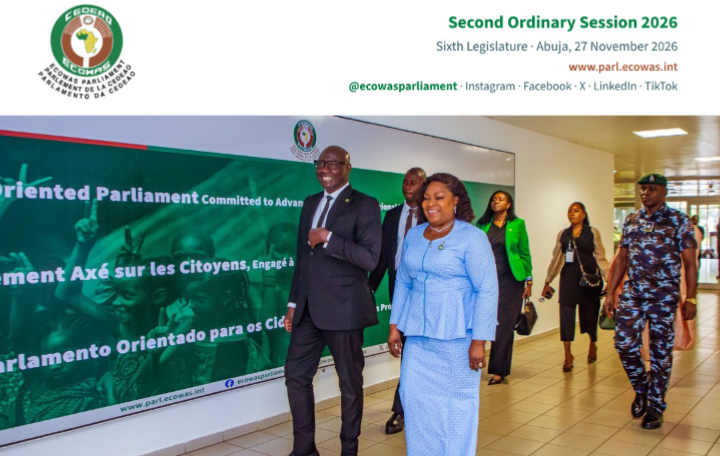
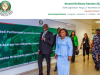
This was the central message as the ECOWAS Parliament opened its Second Ordinary Session of 2026 in Abuja, with its Speaker, Hajia Memounatou Ibrahima, and President of the ECOWAS Commission, General Birame Diop, calling for stronger institutional collaboration and a more effective regional integration process.
While Ibrahima challenged the regional legislature to become a stronger political voice for citizens through effective oversight and accountability, General Birame Diop stressed the need for collective action among Community institutions to tackle insecurity, economic fragmentation and other cross-border challenges.
In her opening address, the Speaker said the ECOWAS Parliament must move beyond observing regional developments and establish itself as an influential institution that brings the Community closer to its citizens.
She noted that the complex challenges confronting West Africa could not be addressed by any single institution, stressing that collective success depended on strong institutional relationships and a shared commitment to translating regional decisions into tangible results.
Ibrahima reaffirmed Parliament’s readiness to work with the Commission and other Community institutions, pointing to the Lungi Declaration, which reaffirmed the commitment of ECOWAS Heads of State and Government to strengthening the legislative and oversight functions of the regional Parliament.
She maintained that sustainable regional integration depended on legitimate institutions, public confidence, respect for the rule of law, democracy and justice.
The Speaker also commended Cabo Verde for the peaceful conduct of its November 15 electoral process and congratulated President José Maria Neves on his re-election.
She expressed hope that the forthcoming elections in The Gambia on December 5 and Nigeria in January 2027 would be conducted peacefully and contribute to democratic stability in the region.
2027 budget and accountability
A major item on the session’s agenda is the consideration of the ECOWAS Community Budget for the 2027 financial year.
Ibrahima urged lawmakers to ensure that every budgetary allocation addresses clearly identified needs and that public resources are deployed efficiently to deliver measurable benefits to citizens.
She raised concerns about mounting financial pressures on Member States, including public debt and challenges affecting the remittance of the Community Levy.
She consequently called on national parliaments to intensify advocacy with their respective governments to ensure the systematic remittance of the levy.
The Parliament will also examine country reports, draft Community Acts and reports from parliamentary oversight missions covering the Interconnected Goods in Transit Management System (SIGMAT), the ECOWAS Mission in The Gambia (ECOMIG), projects of the Regional Agency for Agriculture and Food (RAAF), and the second phase of the Programme for the Promotion of a Climate-Friendly Electricity Market in the ECOWAS Region (ProCEM II).
General Diop seeks stronger regional cooperation
In his address, the President of the ECOWAS Commission, General Diop, called for stronger parliamentary diplomacy and closer cooperation among regional institutions, particularly as West Africa faces growing security and geopolitical challenges.
He said terrorism, migration, humanitarian crises and climate change were challenges that transcended national boundaries, noting that countries in the region shared more than 5,000 kilometres of borders.
He warned that terrorist threats originating in the Sahel continued to spread towards coastal states, making collective security arrangements and stronger regional responses imperative.
General Diop called for renewed engagement with international partners, including the United States, to establish practical security cooperation mechanisms, strengthen border security and promote the free movement of people.
He also condemned terrorist attacks and the killing of civilians, emphasising the need to strengthen regional peace and security initiatives.
On economic integration, he highlighted the opportunities offered by ECOWAS’s population of more than 400 million people, its agricultural potential, natural resources and strategic position in international trade.
However, he warned that these advantages would remain underutilised without interconnected markets, the removal of trade barriers, streamlined customs procedures and improved movement of goods and services.
He identified digitalisation, industrialisation, regional value chains and infrastructure development as critical to economic transformation.
The Commission President further stressed that regional policies must translate into practical benefits for traders, farmers, entrepreneurs and young people.
He described the Parliament as a critical bridge between ECOWAS institutions and citizens, urging lawmakers to strengthen oversight and promote public ownership of the regional integration process.
General Diop also called for attention to the political situation in Guinea-Bissau and urged collective action against xenophobia, particularly in view of its implications for regional stability and solidarity.
He identified the operationalisation of the anti-terrorist brigade, progress towards the proposed single currency, ECO, and the launch of major regional infrastructure projects as priorities requiring sustained commitment.
The Commission President is expected to present the strategic vision of his new management, known as Agenda 309, to Parliament on December 3.
The two leaders’ interventions underscored a shared message: regional integration requires more than agreements between governments.
It demands accountable institutions, effective cooperation and policies that improve the lives of ordinary West Africans.
For citizens whose livelihoods and security are directly affected by decisions taken at the regional level, the ultimate test will be how quickly these commitments translate into visible results.
Join Our WhatsApp Community