From Access To Opportunity: How India Is Transforming Millions Of Lives
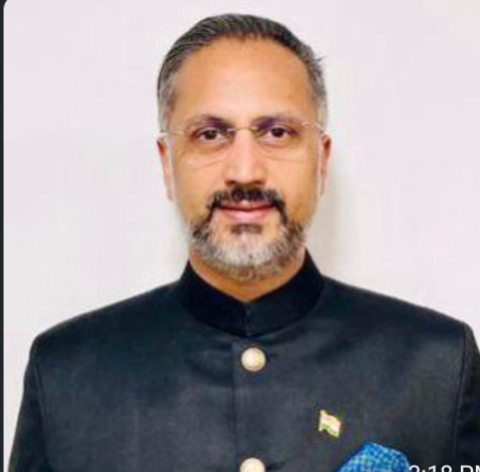
By Abhishek Singh, High Commissioner of India to Nigeria, Benin and ECOWAS
Economic growth is often measured in figures: rising GDP, new investments, expanding industries and improved trade. But its real impact is best seen in ordinary homes.
Does a mother have clean water flowing from her tap? Can a family afford a decent meal? Does a woman have a bank account of her own? And do children have a better chance of building a future beyond the circumstances into which they were born?
These are the questions that matter when measuring development. By these standards, India’s transformation over the past decade has been remarkable.
Guided by Prime Minister Narendra Modi’s vision of Sabka Saath, Sabka Vikas, Sabka Vishwas, Sabka Prayas – Together with All, Development for All, Trust of All and Efforts of All – India has pursued an approach to development that places citizens at its centre.
The objective has been to move beyond welfare as a system of temporary assistance towards empowerment: giving people the resources, opportunities and confidence to participate actively in the country’s economic progress.
The results are reflected in the World Bank’s October 2026 Poverty and Equity Brief, which documents one of the fastest sustained reductions in poverty recorded anywhere in the world.
Between 2011 and 2023, India’s extreme poverty rate, measured at US$3 a day, fell from 27.1 per cent to 2.6 per cent.
At the higher lower-middle-income poverty threshold of US$4.20 a day, the rate declined from 57.7 per cent to 16.1 per cent, lifting approximately 496 million people above the poverty line.
The progress is equally significant in multidimensional poverty, which measures overlapping disadvantages in health, education and living standards.
This declined from 29.17 per cent in 2013-14 to 11.28 per cent in 2022-23, taking approximately 248 million people out of multiple forms of deprivation.
Behind these figures are changes that are beginning to redefine everyday life for millions of Indian families.
Beyond poverty figures: Restoring dignity to households
Poverty is not simply about how much money a family earns. It is also about the daily struggle to access clean water, the health risks associated with cooking over smoky fires, the absence of decent housing and the financial shock that illness can bring.
India’s development strategy has sought to address these challenges together, particularly among households that have historically remained beyond the reach of essential services.
The progress is visible in the numbers. Rural households with tap-water connections increased from 32.3 million in August 2019 to 158.4 million, representing about 82 per cent coverage, by May 2026.
Under the Swachh Bharat (Clean India) Mission, more than 121 million household toilets have been constructed.
More than 105 million free cooking-gas connections have been provided to women from low-income households, while over 30 million rural and 9.8 million urban houses have been completed under the Pradhan Mantri Awas Yojana.
Electricity access has also improved, with average daily power supply in rural areas rising from 12.5 hours in 2014 to 22.6 hours in 2025.
These interventions may appear straightforward, but their implications are far-reaching.
A household with clean water spends less time searching for it. A woman with access to cleaner cooking fuel faces fewer health risks.
A family with decent housing and electricity has a more secure environment in which to work, study and plan for the future.
Equally important is protecting families from falling back into poverty when faced with unexpected hardship.
More than 810 million people receive free foodgrain support, while Ayushman Bharat provides eligible families with hospital insurance cover of up to ₹500,000 annually.
Health indicators are also improving. Maternal mortality declined from 130 deaths per 100,000 live births in 2014-16 to 88 in 2021-23. Child stunting fell from 38.4 per cent in 2015-16 to 29.3 per cent in 2023-24.
Meanwhile, social protection coverage expanded from 19 per cent of the population in 2015 to 68.4 per cent in 2026, reaching nearly one billion people.
The message is clear: development must not only create wealth; it must also protect the gains made by vulnerable households.
Taking government services to the last citizen
One of the biggest challenges facing developing countries is ensuring that public interventions reach the people for whom they are intended.
India’s experience demonstrates how technology can help close this gap.
The JAM Trinity – Jan Dhan bank accounts, Aadhaar digital identity and mobile connectivity – has become a major instrument for expanding financial inclusion and improving the delivery of public services.
Through this system, more than 580 million Jan Dhan bank accounts have been opened, while direct benefit transfers worth ₹6.83 trillion were made in the 2024–25 financial year.
Digital payment systems, particularly the Unified Payments Interface (UPI), alongside portable food-ration services, have further strengthened access to financial services and welfare programmes.
The significance of this infrastructure goes beyond the technology itself. It is about reducing the distance between government and citizens, limiting leakages and ensuring that assistance reaches intended beneficiaries.
It also demonstrates how digital public infrastructure can become an instrument of social inclusion when designed around the needs of ordinary people.
Women are becoming drivers of economic change
Perhaps one of the most encouraging aspects of India’s transformation is the growing economic participation of women.
For development to be sustainable, women must be more than recipients of government assistance.
They must have access to finance, opportunities to own businesses and the freedom to make economic decisions.
Across rural India, women’s self-help groups are helping to make this possible.
Approximately 100 million rural women belong to more than nine million self-help groups, through which they save money, access credit and establish small businesses.
By May 2026, more than 30 million women had become Lakhpati Didis – a term used for women whose annual household income exceeds ₹100,000.
Access to collateral-free loans has also opened new opportunities for small entrepreneurs, with women accounting for approximately two-thirds of the loans.
These developments are important because when women earn, save and invest, the benefits often extend beyond individual households to children’s education, family welfare and community development.
The impact is increasingly reflected in the wider economy.
According to the World Bank’s October 2026 brief, India added 134 million jobs between 2017 and 2023, nearly twice the growth of its working-age population.
The expansion was supported significantly by increased participation of rural women in paid employment, alongside stronger household consumption and social transfers.
Turning community participation into lasting progress
Government policies and public investment can provide infrastructure, but lasting development requires people to take ownership of the changes.
India’s sanitation and rural water initiatives illustrate the importance of community participation.
Sanitation became a nationwide people’s movement, while village assemblies have taken responsibility for certifying full tap-water coverage.
Local women have also received training to test water quality and monitor the safety of community supplies.
This approach recognises an important principle: development is more sustainable when communities are involved in delivering, monitoring and protecting its benefits.
The experience also shows why investment in rural roads, electricity, healthcare and financial inclusion must be viewed as connected priorities.
Healthier families, better-connected communities and economically empowered women are better positioned to work, learn, trade and invest.
The unfinished business of development
Despite the progress, India recognises that its development journey is far from complete.
Poverty remains concentrated in particular regions, while millions of workers still need access to more productive employment and better-paying jobs.
Expanding opportunities, improving livelihoods and ensuring that economic growth benefits every section of society remain critical priorities.
These challenges are central to India’s ambition of becoming a developed nation – Viksit Bharat – by 2047.
The next phase of transformation will therefore require more than expanding access to basic services.
It will demand higher productivity, stronger institutions, better skills and opportunities that enable citizens to move from subsistence to prosperity.
India and Nigeria: Building a partnership around shared progress
India’s development experience also offers useful lessons for countries confronting similar challenges, particularly those seeking to translate economic potential into better living conditions for their populations.
Nigeria and India share several important characteristics. Both are large, youthful and diverse democracies with longstanding diplomatic and economic relations.
India established its liaison office in Lagos in 1958, two years before Nigeria gained independence.
The relationship was elevated to a Strategic Partnership in 2007, reflecting the growing scope of cooperation between both countries.
Bilateral trade stood at approximately US$8 billion between April and September 2026. More than 200 Indian companies operate in Nigeria, collectively making Indian businesses the second-largest employers of Nigerian workers after the Federal Government.
Our cooperation continues to expand across digital public infrastructure, affordable medicines, agriculture, food security, defence, trade and capacity building.
There is considerable scope for both countries to learn from each other’s experiences.
India’s progress in digital financial inclusion, direct benefit transfers, rural development and women’s economic empowerment offers practical areas for engagement and knowledge-sharing.
Nigeria, with its enormous human and natural resources, also has opportunities to adapt relevant experiences to its own development priorities.
Of course, every country must determine its development path according to its circumstances and aspirations. India’s experience is not a blueprint to be copied wholesale.
Rather, it demonstrates what sustained political commitment, targeted investment, technology and community participation can achieve when development is focused on people.