FG Unveils ₦70bn Plan To Defeat Deadly Noma, Protect Nigerian Children
Princess-Ekwi Ajide
A preventable disease that can destroy a child’s face, leave survivors permanently disfigured or even claim young lives is at the centre of a new Federal Government campaign to improve oral healthcare and eliminate Noma in Nigeria.
With more than 80 per cent of Nigerians never having visited a dentist and two out of every three children living with untreated dental cavities, the Federal Government has launched a five-year, ₦70 billion National Oral Health Strategic Plan aimed at reversing the country’s poor oral health indicators.
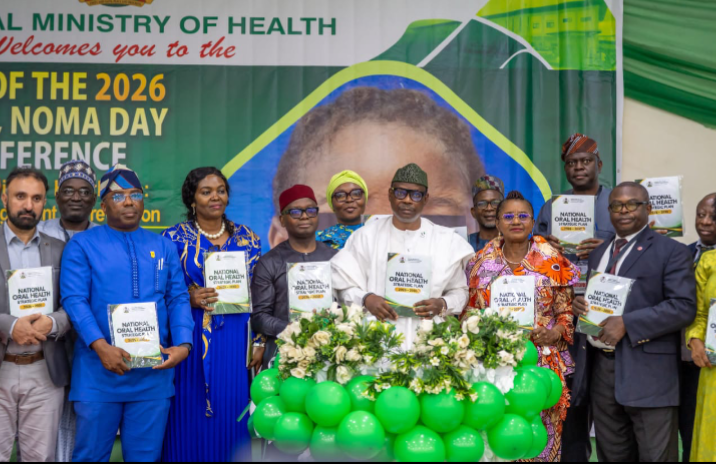
The Minister of State for Health and Social Welfare, Dr Iziaq Adekunle Salako, unveiled the National Oral Health Strategic Plan 2026-2030 on Monday in Abuja during the commemoration of National Noma Day and National Oral Health Day
Salako described oral health as an essential component of Universal Health Coverage, insisting that no Nigerian child should die or suffer permanent facial disfigurement from a preventable disease.
Noma, also known as cancrum oris, is a rapidly progressing gangrenous disease that primarily affects malnourished children, particularly those aged between two and six years, living in impoverished communities.
It can cause severe destruction of facial tissues and death if not detected and treated early.
Nigeria’s burden is particularly high in the North-West and North-East, where poverty, malnutrition and limited access to healthcare increase children’s vulnerability.
To tackle the disease, the Minister disclosed that Noma surveillance had been integrated into the Integrated Disease Surveillance and Response system, while frontline health workers, traditional healers and traditional birth attendants had been trained across 19 states to recognise early symptoms and facilitate prompt referrals.
He said the new strategic plan would strengthen preventive care, expand school-based oral health programmes, promote access to fluoride toothpaste and reduce sugar consumption, while integrating oral healthcare into maternal and child health, nutrition and non-communicable disease programmes.
The plan also targets improved distribution of oral health professionals, stronger referral systems and expanded services across all 774 local government areas.
Highlighting the shortage of dental personnel, Salako said Nigeria currently had approximately one dentist for every 38,000 people, far below the World Health Organisation’s recommended ratio of one to 7,500.
He added that the Federal Government was addressing the gap through the integration of oral health services into Primary Healthcare under the Sector-Wide Approach and Basic Health Care Provision Fund.
The Minister also announced that the Federal Executive Council had approved the National Centre for Oral Health Establishment Bill 2026 and transmitted it to the National Assembly for consideration.
Giving further insight into the scale of intervention required, the Country Representative of Médecins Sans Frontières (MSF), Dr Aldikhari Ahmed, disclosed that the organisation’s collaboration with the Federal and Sokoto State Governments had facilitated more than 1,759 major reconstructive surgeries for 1,174 Noma patients through 35 surgical missions.
Ahmed said 114 surgeries had already been performed on 96 patients in 2026, while 28 Nigerian surgeons and 14 anaesthetists had received specialised training through the partnership.
He commended the government’s efforts to integrate Noma into primary healthcare guidelines and disease surveillance systems but stressed that sustainable funding and effective implementation would determine the success of the initiative.
Similarly, the World Health Organisation’s Country Representative in Nigeria, Dr Pavel Ursu, represented by Dr Victor, called for stronger disease surveillance, improved capacity among frontline health workers and psychosocial support for survivors and their families.
He emphasised that early detection and prompt treatment could prevent the devastating consequences of Noma.
On the legislative front, the Chairman of the Senate Committee on Health, Senator Ipalibo Harry-Banigo, reaffirmed the National Assembly’s commitment to making oral health an integral part of routine healthcare delivery.
She identified the Noma Children’s Hospital in Sokoto, the Intercountry Centre in Jos and the ongoing retrofitting of dental centres in federal university teaching hospitals as important interventions in the country’s response.
The senator said lawmakers were pursuing measures to institutionalise routine oral health screening, early diagnosis of dental infections and specialised training, while pledging stronger oversight to ensure that budgetary allocations translate into actual services for vulnerable families.
In her welcome remarks, the Permanent Secretary of the Federal Ministry of Health and Social Welfare, Daju Kachollom S. represented by Dr Dogara Okara, stressed the importance of equipping community health workers and primary healthcare personnel with the skills to recognise oral diseases, educate families and facilitate early referrals.
She called for sustained collaboration among government institutions, development partners, professional associations, academic institutions and communities.
Also recalling the humanitarian contributions of the late Mama Ute Winkler-Stumpf, founder of Hilfsaktion Noma, Dr Adebimpe Adebiyi said her work with the WHO and Nigerian authorities helped establish critical treatment infrastructure, including the Noma Centre in Abuja, where children have benefited from free reconstructive surgeries.
Adebiyi urged stakeholders to build on that legacy by moving beyond emergency treatment towards sustainable prevention, early diagnosis and community awareness.
Salako called on state and local governments to domesticate the new strategic plan and urged development partners, including WHO, UNICEF and the FDI World Dental Federation, to sustain their support.
He maintained that eliminating Noma would require more than medical interventions, stressing the importance of nutrition, public awareness, community participation and sustained investment.
For thousands of vulnerable Nigerian children, the success of the ₦70 billion plan could mean the difference between early treatment and a lifetime of disfigurement or a preventable death.
Join Our WhatsApp Community