2027: IPC Warns Politicians As Journalists Face Fresh Accountability Challenge
Princess-Ekwi Ajide
For Nigerians battling rising living costs, insecurity, unemployment and poor public services, the 2027 general elections present another opportunity to demand better leadership.
But beyond campaign rallies, political endorsements and promises of a brighter future, one critical question remains: What have those seeking power actually done for the people?
For this, the International Press Centre (IPC) says Nigerian journalists must make that question central to election coverage, challenging politicians to account for their records rather than allowing campaign spectacles to dominate public discourse.
IPC Executive Director, Mr Lanre Arogundade, urged journalists to abandon routine political reporting and embrace aggressive accountability journalism ahead of the 2027 general elections.
He said Nigerians deserve election coverage that examines the performance of public officeholders, verifies campaign promises and exposes the gap between political rhetoric and actual delivery.
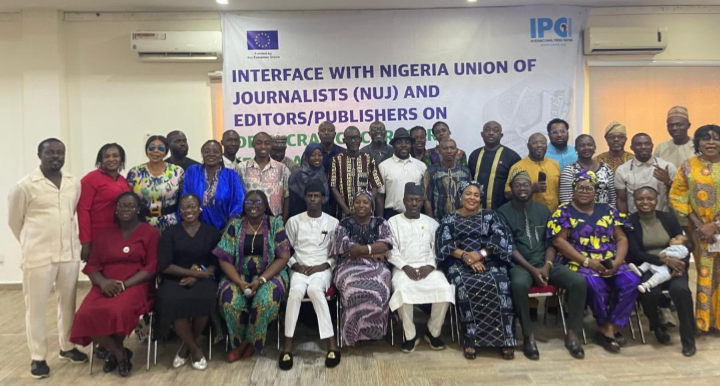
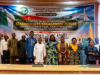
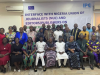
Arogundade made the call in an address delivered on his behalf by IPC Programme Officer in Abuja, Melody Akinjiyanto, at a one-day interface with the Nigeria Union of Journalists (NUJ) and online editors and publishers on Democratic Scorecard, Professional and Democratic Accountability Journalism Ahead of the 2027 General Elections.
The engagement was organised by IPC under Component 4 (Support to Media) of the European Union Support to Democratic Governance in Nigeria (EU-SDGN III) project, with IPC as the lead partner.
Arogundade argued that election reporting must go beyond who is contesting, defecting, receiving endorsements or attracting the largest crowds.
Instead, he challenged journalists to place the economy, education, healthcare, security, employment and infrastructure under sustained public scrutiny.
He maintained that elections should be about citizens, their aspirations and their expectations of leadership, rather than the political ambitions of candidates and parties.
The IPC chief also called for greater attention to the concerns of women, young people, persons with disabilities and other groups whose voices are often missing from political conversations.
He warned that the growing spread of misinformation, manipulated digital content, hate speech and divisive narratives posed serious threats to credible elections and public confidence in democratic institutions.
According to him, journalists must strengthen their verification skills and resist the temptation to sacrifice accuracy for speed, particularly when reporting politically sensitive issues.
He stressed that fact-checking should be an essential part of responsible journalism, with political statements, government statistics and claims of achievements independently verified before publication.
Arogundade further highlighted the need to protect journalists from intimidation, harassment and unlawful interference, noting that professional independence and safety are essential to effective accountability reporting.
He urged participants to translate the lessons from the engagement into stronger newsroom policies, improved verification procedures and more citizen-focused electoral coverage.
In a goodwill message, President of the Guild of Corporate Online Publishers (GOCOP), Mr Danlami Nmodu, also cautioned journalists against publishing unverified photographs, videos and other materials circulating on social media.
He warned that sophisticated digital manipulation could deceive even experienced media practitioners, with potentially serious consequences for public opinion and electoral choices.
“Before you publish, make sure that you are sure of what you are selling on the market,” Nmodu cautioned.
He said inaccurate reports could mislead voters into making wrong electoral decisions, stressing that the responsibility of journalists becomes even greater during election periods.
“The essence of our election is to elect leaders who will serve us. If we poison the minds of the people with facts that are not correct, they may elect the wrong people,” he said.
Nmodu urged media organisations to uphold accuracy, credibility and public-interest journalism, regardless of political pressure or competition to break news.
Resource persons at the engagement included Dr Sarah Gambo of the Department of Broadcasting, Film and Multimedia Studies, University of Abuja, and Mr Ahmad Aluko, a researcher and information disorder analyst.
Arogundade acknowledged the contributions of the NUJ, GOCOP, the resource persons and the European Union for supporting the initiative.
He challenged journalists to measure the success of the training not by attendance or discussions, but by the quality of stories published, political claims verified, citizens’ concerns amplified and accountability questions raised throughout the electoral process.
As political activities gather momentum ahead of 2027, the message from IPC is clear: Nigerians must not be left with another election season dominated by attractive promises and political performances.
Politicians must be ready to defend their records, while journalists must ensure that voters have the facts to judge those seeking their mandate.
Join Our WhatsApp Community