Half The World, Just 27% Of Parliament: Why Women Still Lack Political Power
Bobby Ramakant
Women make up roughly half of humanity and, in many democracies, a substantial share of voters.
Yet they remain a minority in the institutions where the decisions that shape their lives are made.
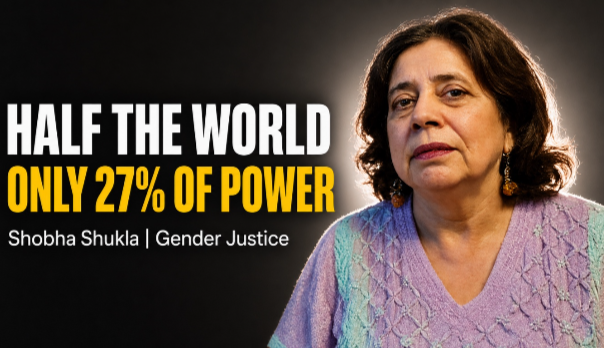
That gap was at the heart of a session on women’s political representation organised by the Moment for Women Alliance and the African Girls Empowerment Network (AGE Network), where gender justice advocate Shobha Shukla argued that inclusive democracy must be treated as a gender justice issue, not an optional addition to electoral politics.
Globally, women hold just 27.5 per cent of parliamentary seats and 22.4 per cent of cabinet positions.
Only 28 countries have a woman serving as head of state or government, while more than 100 have never had a woman in their highest political office.
At the current pace, gender parity in the highest levels of political power remains more than a century away.
For Shukla, the problem is bigger than numbers.
“Political equality cannot stop at the ballot box,” she said, stressing that women must have a meaningful voice in the rooms where laws are made, budgets allocated and public priorities set.
The barriers are familiar but persistent: patriarchal ideas about leadership, unequal care responsibilities, male-dominated political parties, limited access to campaign finance and nominations, and harassment and online abuse targeting women who enter public life.
Being present is not the same as having power.
Shukla challenged the notion that a few more women in political institutions automatically amount to equality.
Representation matters, she argued, but so do agency, influence and the ability to shape decisions.
That distinction is particularly relevant to Nigeria as the country approaches the 2027 general elections.
The electoral cycle offers another opportunity to ask not only how many women will contest and win, but whether political parties and institutions are prepared to remove the structural barriers that keep women from power.
Quotas and affirmative measures can help break entrenched patterns, but they cannot work alone.
Political parties must open up nominations, leadership positions, campaign resources and decision-making structures.
Governments must also address the unequal burden of unpaid care through measures such as affordable childcare, parental leave and social protection.
The larger point is simple: a democracy cannot claim to represent everyone while systematically excluding half its population from political power.
For Nigeria and other countries still struggling with gender inequality in politics, the challenge is no longer simply getting women through the ballot box.
It is ensuring that they have a seat where power is exercised-, and the authority to use it.
Bobby Ramakant – CNS (Citizen News Service)
Join Our WhatsApp Community